JEO 13 - How NASA's Lunar Pivots will Impact JAXA
NASA has made a series of dramatic announcements about changes in direction for its lunar exploration plans, and it's going to have a significant impact on Japan and other partners.
Welcome to Japan Earth Observer (JEO), a monthly newsletter about the space, Earth observation, and geospatial industries in Japan. NASA has made a series of dramatic announcements about changes in direction for its lunar exploration plans, and it's going to have a significant impact on Japan and other partners.
Digesting NASA's Revised Vision - What does it mean for Japan?
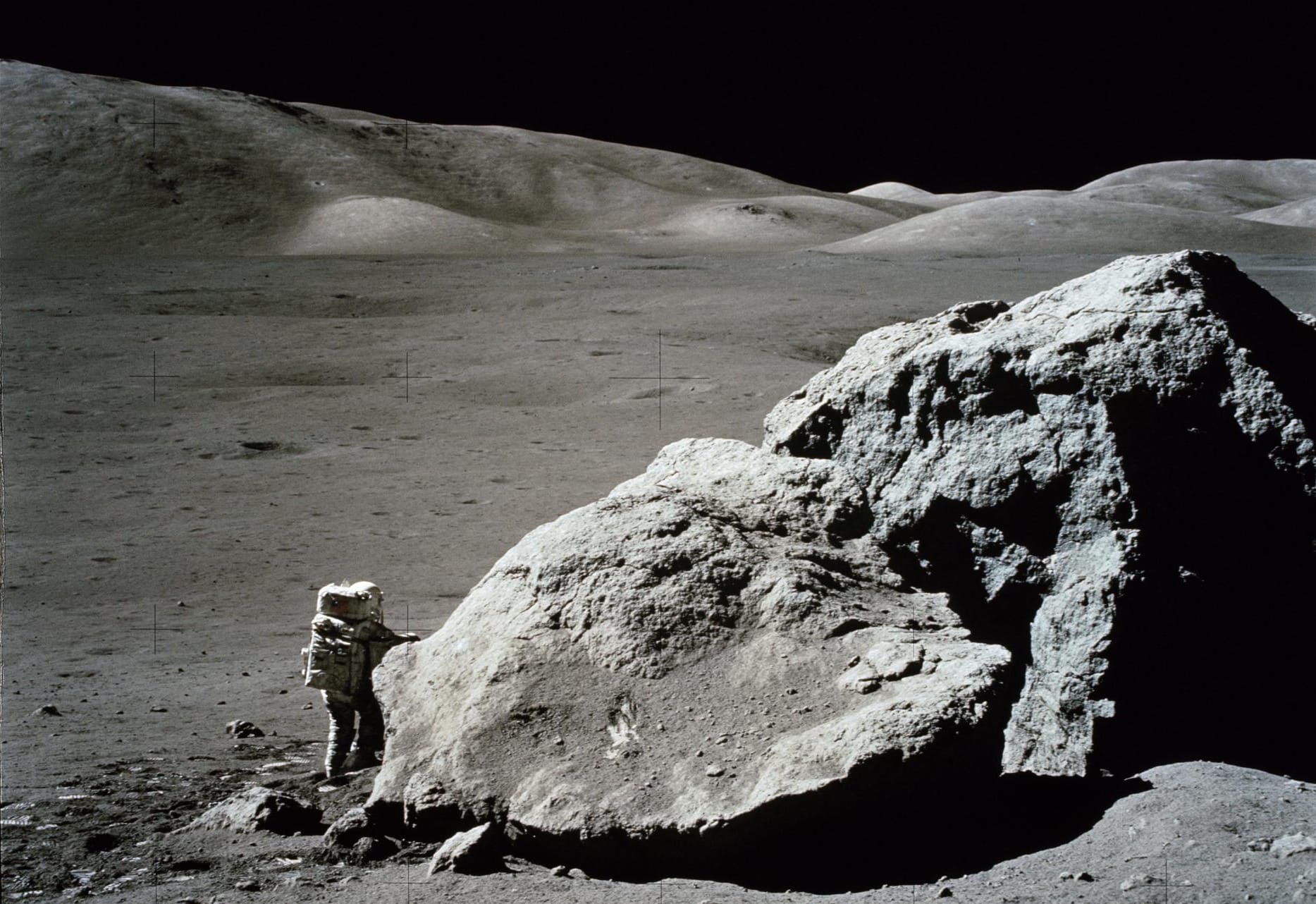
NASA made a pile of announcements about lunar exploration last week. In addition to reorganizing the objectives for getting people and robots to the moon, NASA cancelled (or at least, halted indefinitely?) the Lunar Gateway project. Instead, NASA is going to shift all of the Gateway resources toward building, supporting, and inhabiting a lunar base near the South Pole and sending both robots and people to the moon on an accelerated cadence.
Since 2019 (this isn’t the first pivot) NASA’s lunar exploration plans have been centered on the Artemis program and aim to establish a sustainable, long-term human presence at the Moon's South Pole. Up until last week, this included the heavy Space Launch System (SLS) rocket, the Orion crew capsule, the Lunar Gateway outpost in lunar orbit, commercial Human Landing Systems (HLS) from SpaceX and Blue Origin, and international partnerships. The new, new plan makes several changes [Payload]:
- Human Transportation Missions
- Artemis 3 will launch sooner (in 2027) but will not go to the moon as originally planned; rather, it will focus on the Orion capsule rendevouzing with the commercial landers.
- Artemis 4 will send a crew to the moon in 2028 but on the current SLS rocket design, rather than a planned upgrade to SLS Block 1B.
- Starting with Artemis 6, crewed missions will go to the moon twice a year
- Phase 1: Build, Test, Learn: Accelerate the tempo of lunar landers and technology demonstrations under the Commercial Lunar Payload Services (CLPS) profgram, including testing rovers, instruments, power generation, communications, navigation, and scientific investigations. There are two CLPS trips already planned for 2026 and they will ramp up to 10 launches in 2027 and 12 in 2028
- Phase 2: Establish Early Infrastructure: Beginning in 2029, send astronauts to a semi-habitable base on the lunar surface. Integrate rovers (including the JAXA/Toyoto pressurized rover), scientific payloads, infrastructure, and other capabilities.
- Phase 3: Enable Long-Duration Human Presence: Rely on high capacity commercial cargo and human landing systems to send heavier infrastructure and habitation structures the enable “semi-permanent” human occupation for 28-day stretches. NASA called out the Italian Space Agency’s (ASI) multi-purpose habitats and the Canadian Space Agency’s (CSA) Lunar Utility Vehicle (it turns out Canada can make more than robotic arms for space). Crews and robots will begin building roads and landing pads that will support long-term operations.
- Bypass the Gateway: Without the upgraded SLS Block 1B, the SLS won’t have the lift capacity to boost the Gateway components to lunar orbit.
Phase 1 will not be a modest increase in flight cadence. NASA wants to use the CLPS program to send up to 30 robotic landings starting in 2027. The previously shelved water-hunting VIPER rover is back on for launch in 2027, using a Blue Origin rocket to deliver it to the lunar surface. NASA will issue an RFI to solicit proposals for payloads to launch on the additional flights in 2027 and 2028.
NASA also announced changes in plans for commercial LEO space stations and Mars exploration, but I’ll focus on the lunar plans first.
Gateway Gut Punch for Partners
The demise of the Lunar Gateway has got to be both a gut punch and some whiplash for the international partners in Japan, Europe, Canada and UAE. This was supposed to be an international collaboration that would build on the success of the International Space Station (ISS). Having handed off LEO space stations to commercial companies NASA would lead an international consortium to lunar exploration with the Gateway as a transit hub to the lunar surface. The cancellation was probably at least partially expected after the Trump administration announced its intention to cancel Gateway last year. But Congress restored the funding for Gateway in NASA’s 2026 budget in January. I suppose that Congress could again redirect the funding back to Gateway, but NASA probably can’t afford to pursue both efforts and it's likely that Jared Isaacman, the new NASA Administrator will make the case that this new path is the best route forward. Early indications are that key members of Congress are on board [Payload] with the change of plans.
This is going to have a non-trivial impact on JAXA, which had agreed to build multiple components for the orbital Gateway. First, ESA and JAXA have been working together to build the Lunar International Habitation Module (Lunar I-HAB). JAXA was responsible for supplying the life support system, environmental controls, batteries, thermal control, and imagery components on the I-HAB. Second, JAXA had also committed to providing a cargo resupply vehicle, a major upgrade to the HTV-X, called HTV-XG. Mitsubishi Heavy Industries has been leading that effort, which included a major increase in power (for maintaining the cargo environment), reduction in weight by shifting from metal to composite materials, and the addition of a heat radiator. I suppose it's possible that the orbital habitat life support system tech could potentially be repurposed for use on the lunar surface, but I can't see how an HTV-XG cargo vehicle could be repurposed for the lunar surface, and it must be irksome to invest in a project for years and then have the rug pulled out from under your efforts.
While this significantly impacts JAXA, it arguably has a far greater impact for ESA. They have contracts with Thales Alenia, Airbus, Redwire, Beyond Gravity and other to build multiple Gateway modules, including: Lunar I-Hab module (one of two habitation modules); the Lunar View module for refueling for power and propulsion and cargo logistics; the Lunar Link telecom component for communications with the lunar surface; the European Service Module for the Orion spacecraft; components of the HALO module; and many subcomponents. This represents hundreds of millions of euros of investments. It’s possible that some of these efforts can be repurposed for the lunar surface or later Mars missions, or even for LEO space station efforts. Nonetheless, it’s going to be a big financial hit at a time when European trust in the reliability of the United States is at a very low ebb. I’m guessing that there are some urgent and heated Zoom calls being held between NASA, JAXA, ESA, and the UAE Space Agency to figure out how they might salvage the investments they’ve already made.
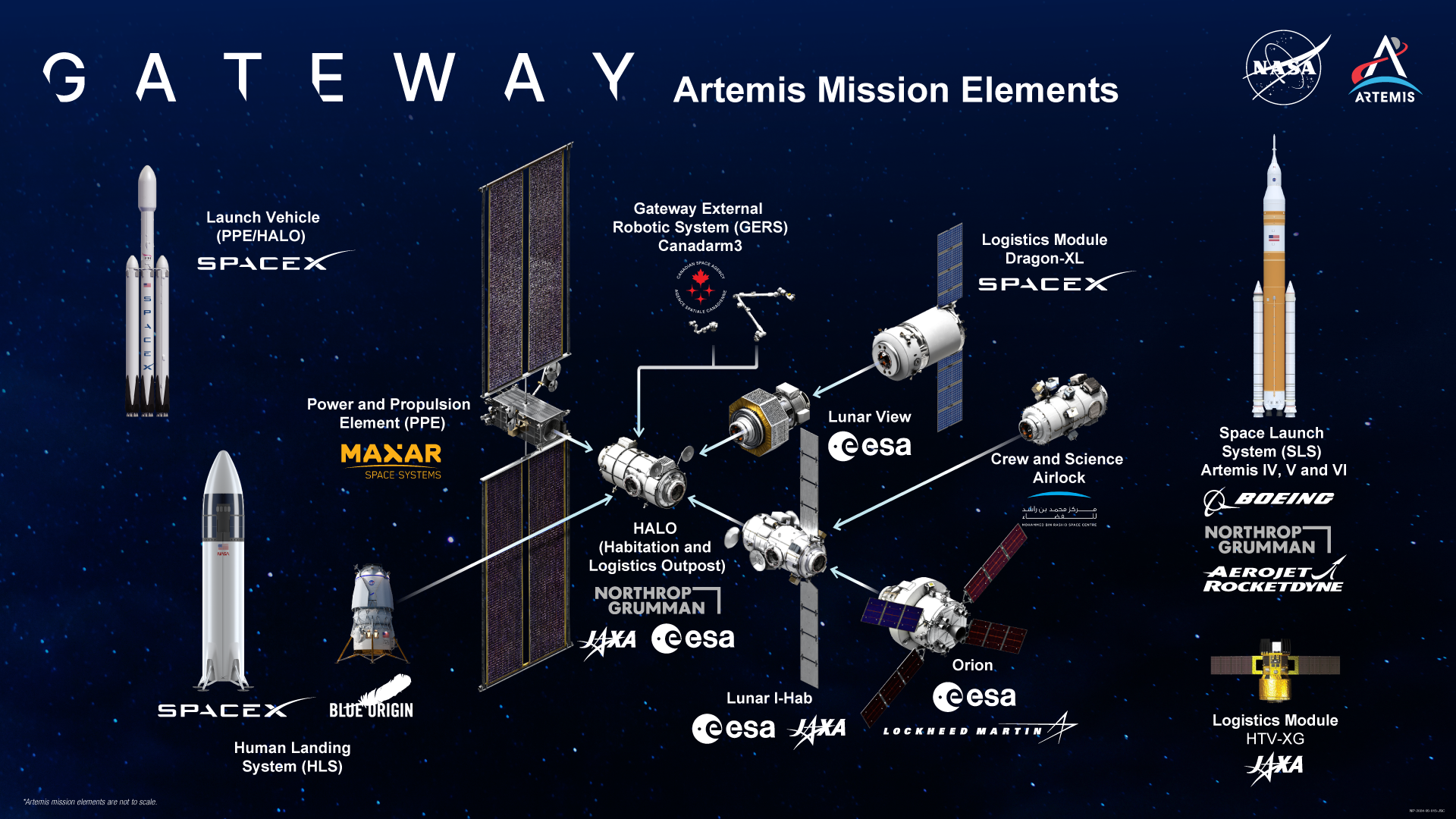
(Former) Lunar Gateway architecture. We hardly knew thee. Source: NASA
Lunar Alignment with JAXA Initiatives
That said, JAXA has allocated significant resources and attention toward lunar exploration initiatives, in general, and has a broad portfolio of projects aimed at lunar landers, communications, debris management, and water discovery on the Moon. The new NASA vision for lunar surface exploration will also align well with many Japanese companies.
- Toyota's pressurized lunar rover will remain relevant, and perhaps on a faster timeline.
- GITAI is working on robots for construction on the lunar surface.
- Kurita Water Industries (栗田工業株式会社) is working with Takasago Thermal Engineering (高砂熱学工業株式会社) and ispace on lunar water purification.
- Power Laser Technology (株式会社パワーレーザー) is building 3D printing tech for lunar construction as well as lasers for optical communications.
- TOWING Co. is developing soil that can be made from lunar regolith.
- ispace obviously has multiple lunar landers under development.
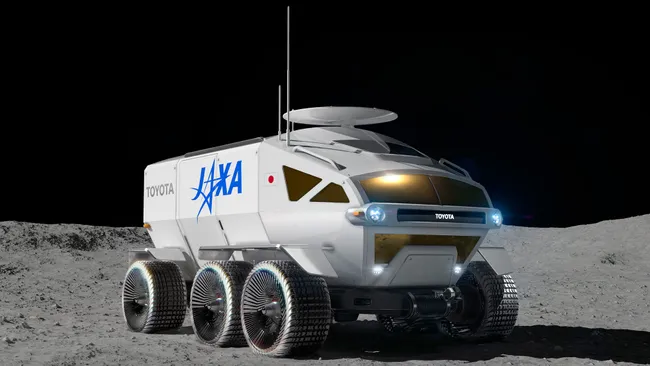
Artist's illustration of the planned Toyota/JAXA pressurized crew rover on the Moon. Credit: Toyota/JAXA
Commercial LEO Space Station Changes
In addition to the lunar exploration pivot, NASA delivered a surprise assertion that commercial space station efforts that aim to replace the ISS are not moving fast enough. NASA now wants to potentially procure a government-owned “Core Module” that will attach to the ISS and provide power and life support to commercial segments that dock with it. The Core Module would be used to test and validate commercial modules, before detaching into free flight. NASA also wants to catalyze the orbital economy with private astronaut missions, joint missions, module competitions, and prize-based awards. NASA cites a lack of demand for commercial space station services, such as private tourism, manufacturing, and research on the ISS as a key impediment to development of the market.
Why the Core Module? NASA wants to speed up deployment of commercial space stations as well as avoid a scenario in which we end up with only one commercial provider. By providing a key core component that would be common to all commercial space stations, NASA thinks it will accelerate all of the ongoing efforts. That might make sense. However, it appears that no one from NASA talked to the commercial space companies currently developing space stations. They are not impressed and neither is Congress [Payload]. Dave Cavossa, president of the nonprofit Commercial Space Federation advocacy group that represents several commercial space station developers likened it to Lucy snatching the football as Charlie Brown approached to kick it. In testimony to Congress, Cavossa highlighted that commercial space station companies have already raised more than US $2 billion in private capital, with more than $1 billion of that just in the past six months. These companies believe that while there may not be many buyers for commercial services on the ISS, its costs are high, and private firms are likely to be able to deliver similar services for much lower fees.
In the meantime, unlike the abandonment of Gateway, NASA hasn’t yet cancelled its current plans for supporting commercial LEO space stations. It’s going to put out a Request for Information (RFI) to explore the newly proposed approach and then potentially issue RFPs after that.
Why does this matter for Japan? The Japanese Kibo research module on the ISS has been an extraordinary commercial, research, and diplomatic success for Japan. In the post-ISS era, Japan wants to retain a seat at the table and have a chance at building on that success. Japan does not currently have the resources to build a full space station on its own, but while the Japanese government is not directly involved in the various commercial space station efforts, Japanese firms are key investors or partners in every one of them. If NASA is going to change its strategy, it is likely to have a significant impact on the commercial viability of these activities. The U.S. Congress could potentially weigh in on this, and the commercial firms will likely have some influence on how this plays out. In the meantime, the change in direction has created uncertainty.
NASA Instruments on JAXA/ISRO LUPEX
On the same day NASA shared the halt to the Lunar Gateway project and revised Artemis and commercial LEO space station plans, they also announced it will be providing an instrument to the LUPEX lander [NASA] being developed by JAXA and ISRO. I actually don't think this was news as the water-hunting Neutron Spectrometer instrument has been planned for inclusion on the LUPEX mission for at least the past three years. But the JAXA press release indicated that NASA and JAXA had signed the formal Implementing Arrangement (IA), so that probably justified the renewed attention. NASA will also be contributing the use of its Deep Space Network to support LUPEX rover operations. The Neutron Spectrometer System (NSS) will be used to detect hydrogen beneath the lunar surface in order to carry out detailed surveys of the distribution and quantity of water near the surface. The NSS is a sophisticated instrument developed at NASA Ames, but it is not a one-off. The first NSS flew in 2024 on the failed Astrobotics Peregrine mission. In addition to LUPEX, the NSS will also fly on the recently revived NASA VIPER lunar rover mission and on the MoonRanger “micro rover” being developed by Carnegie Mellon University. NASA is getting NSS on multiple rover missions in order to generate the best possible map of subsurface water near the Moon’s South Pole.
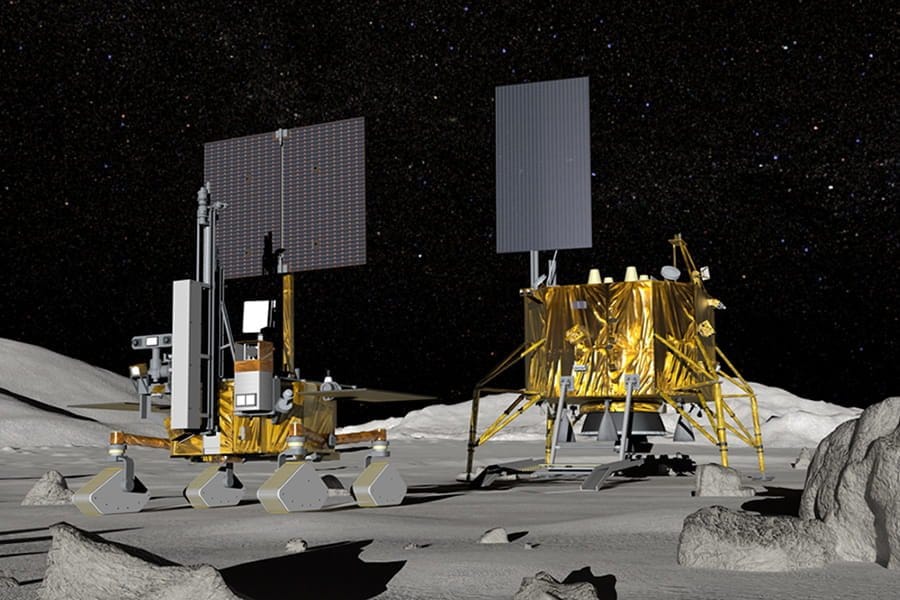
Artist illustration of the LUPEX lander and rover. Source: JAXA
Urgency vs. Reliability
After a year of mixed messages and a muddled vision, the new NASA Administrator, Jared Isaacman, has brought decisive leadership, a clear vision, and a palpable sense of urgency. But it’s big shift from the previous direction, and while there are doubtless U.S. domestic companies negatively affected by the changes, a lot of NASA’s international partners are going to bear the brunt of yet another strategy shift.
And this is not happening in a vacuum [well, maybe some of it ends up in a vacuum😁]. The revised vision arrives on the heels of a year of tariffs, aggressive threats against allies, an unprovoked war with Iran, and general belligerence and hostility toward nations that have previously been friends, allies, and partners. Historically, space endeavors have sometimes been a means of overcoming politics to accomplish extraordinary feats that benefit everyone on Earth, and NASA has often been a leader in those endeavors. But true partners and friends build trust by demonstrating reliability and trustworthiness. And there are only so many times one can turn the other cheek before statements about “partnership", "friendship", and “joint missions” ring hollow, and nations will seek partnership elsewhere.
If you’ve made it this far, thank you for reading. Please be in touch via LinkedIn with any feedback, questions, comments, or requests for future topics. And if you have a friend or colleague that you think would enjoy JEO, please share it!
Until next time,
Robert
The spring sea
gently rising and falling
all the day long.
– Yosa Buson (1716–1784) - translated by Robert Hass
春の海終日
(ひねもす)のたり
のたりかな
Haru no umi
hinemosu notari
notari kana