JEO 20 - News Roundup - 16 Sept 2026
Topping this news roundup, we lead off with the Hayabusa asteroid flyby and the successful test of the JAXA RV-X reusable rocket prototype.
Welcome to Japan Earth Observer (JEO), a monthly newsletter about the space, Earth observation and geospatial industries in Japan.
Topping this news roundup, we lead off with the Hayabusa asteroid flyby and the successful test of the JAXA RV-X reusable rocket prototype plus the usual funding and contract announcements, science, international collaborations, and conferences.
On to the news…
News & Announcements
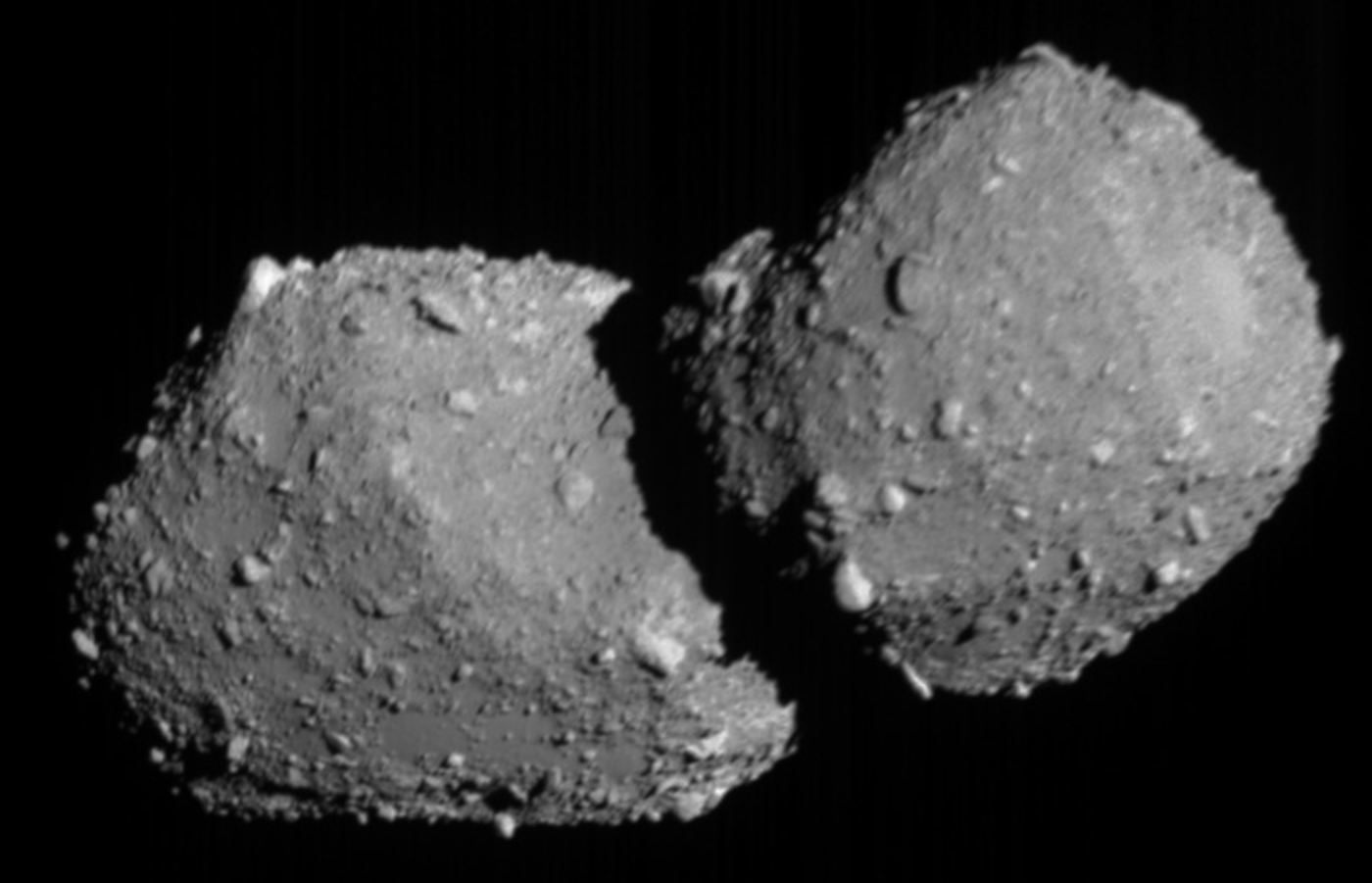
Hayabusa2 nailed its asteroid Torifune flyby.
A few weeks ago JAXA pulled off another deep space mission that was the product of several years of careful design and engineering, operational excellence, and global collaboration.
The Hayabusa2 asteroid mission was launched in 2014. In 2018 the space probe successfully rendezvoused with asteroid 162173 Ryugu, collected two sets of samples, returned to Earth, and dropped off the samples in 2020. That was the end of the originally planned mission, but Hayabusa2 still had some fuel left, and JAXA determined that with some Earth gravity assists, it might be possible for Hayabusa2 to extend its mission and visit two additional asteroids. Like many Japanese workers, Hayabusa2 is working well past its retirement age.
In early July it made a fast, high-precision flyby of asteroid Torifune. Hayabusa2 was not designed for this particular mission, so JAXA had to develop a very careful operational plan and execute it flawlessly. First, the asteroid is only about 400m x 800m in size, and Hayabusa2's sensors don't have sufficient resolution to take good images from a safe distance. JAXA estimated it would need to flyby at less than 1,000m in order to take useful images. In addition, it would be a very fast flyby of 5.3 km/sec (19,000 km/hr), it would only have a fraction of second to capture images. So it would have to fly many times faster than a bullet, pass within a distance no larger than the diameter of the asteroid (around 800 meters), and do this 100 million kilometers from Earth. JAXA was able to make trajectory adjustments in the days and hours before the flyby but the distance was such that Hayabusa2 had to be autonomous during the actual passage. The proposed flyby was so daring [Space.com] that the scientists on the team were initially opposed to the attempt. The operations team had to work hard to convince them to move forward.
Because this was not part of Hayabusa2's original plan and required a high precision flyby from a significant distance, the mission was framed as rehearsal for a planetary defense scenario. If we discovered an asteroid that could potentially collide with the Earth and cause substantial damage, we would likely have to both launch new missions and re-task existing spacecraft to study and then make an extremely precise impact on the approaching asteroid moving at very high speed in order to alter its trajectory. NASA demonstrated this capability on the 2022 DART asteroid impact mission. This precision flyby by JAXA has demonstrated that Japan could achieve such a strike with a reasonable chance of success.
The flyby passed in less than the wink of an eye, but Hayabasa2 successfully captured images from an optical telephoto camera, a mid-infrared camera measuring temperature, a near-infrared spectrometer (NIRS3) to analyze materials, and a LiDAR altimeter to measure distance. Post-flyby analysis confirmed Torifune dimensions at ~840m x ~340m, and the actual approach distance was measured at 744m from the center (~400m from surface). The previous closest asteroid flyby was by China's Chang'e-2 probe at 770m in 2012, so Japan now holds the record for the closest asteroid flyby. Hayabusa2's ion engines were restarted on 9 July, and it will now make Earth gravity assists in Dec 2027 and Jun 2028, before arriving at its next asteroid target, 1998 KY26, in July 2031.
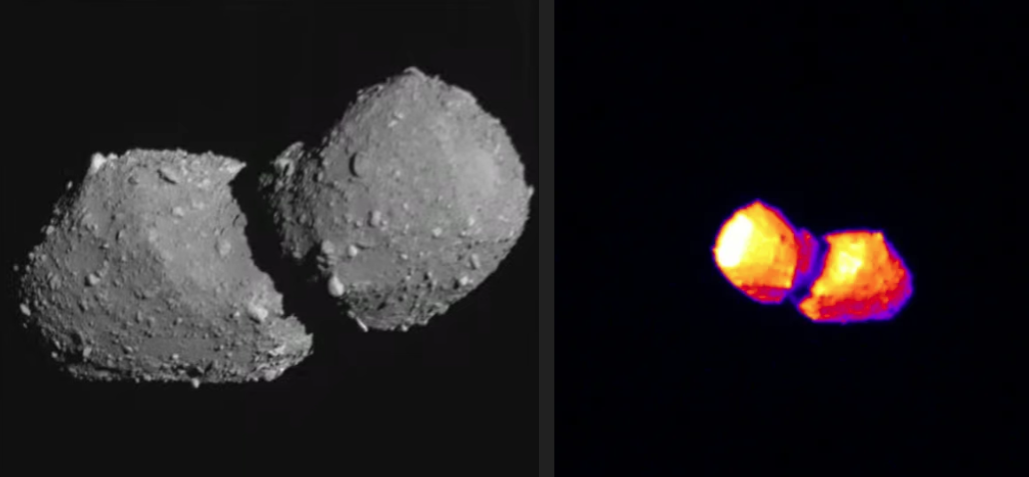
Images from Hayabusa2 flyby of asteroid Torifune. Source: JAXA
On the collaboration front, JAXA worked with several domestic universities as well as Georgia Institute of Technology. NASA JPL provided access to the Deep Space Network to communicate with the spacecraft. Commercial firms Fujitsu and NEC played important technical roles. Finally, an international network of telescopes kept watch in case the navigation went awry and Hayabusa hit the asteroid, which would have been a different kind of planetary defense mission.
With the Torifune flyby completed, Hayabusa2 will now return to Earth in December 2027 and June 2028, each time performing gravity-assist maneuvers, before heading back out into the solar system to investigate another asteroid, "1998 KY26," in July 2031. This extended mission is not a sure bet. The four ion engines that provide propulsion have all deteriorated and the reaction wheels used for attitude control also have problems. Further, the target asteroid is only 11m in diameter and rotating rapidly.
JAXA Lands its RV-X Reusable Rocket Test
After several reschedulings, JAXA finally had a successful flight test for its RV-X vertical-takeoff vertical-landing demonstrator [Sankei Shinbun] at Noshiro Rocket Testing Center in Akita. The 7.3m vehicle has been delayed five times since its original March target due to weather and ground facility issues. It wasn't a big, flashy test; it simply ascended to 10m, executed a 10m lateral translation, and then landed vertically and upright, without blowing up.
Japan's objective is to develop a reusable rocket, but RV-X remains a far cry from SpaceX's Falcon 9 or Blue Origin's New Glenn. Also this week, China returned a Long March 10B first stage from a full orbital launch using a wire rig on a ship. JAXA and Mitsubishi Heavy Industries have been developing and testing these reusable engines for 10 years. RV-X is not even the first Japanese rocket to complete a takeoff-and-landing test like this; Honda successfully achieved a similar feet to a 271 meter altitude in June 2025.
While congratulations are in order - a successful test is a successful test - JAXA seems to be taking a slow, risk-averse approach to developing this technology. Its next step will be a test with the CALLISTO program, a joint development effort with France (CNES) and Germany (DLR) to which Japan is contributing the RV-X engines and control systems. CALLISTO, which, at 14 meters, will be about double the size of the RV-X, is currently scheduled to launch from French Guiana in early 2027, but that schedule has slipped several times from its original 2020 target. It remains to be seen how this will feed back into a lower cost, reusable flagship rocket, like a future version of the H3.
What would it take for JAXA to get Honda and MHI working together to move the ball down the field more rapidly?
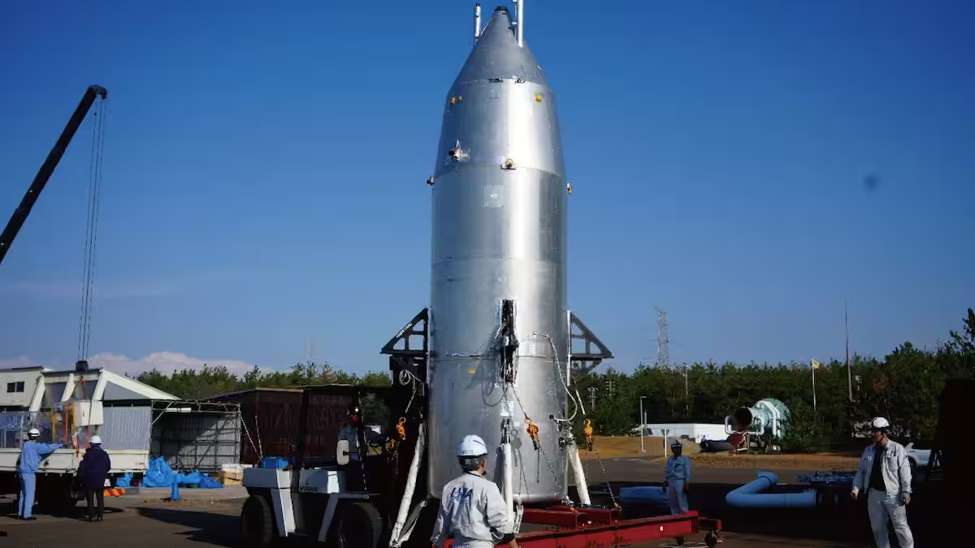
RV-X reusable rocket. Source: JAXA
Japan's OHISAMA: space-based solar power satellite to beam electricity via microwave
Japan Space Systems (JSS), a nonprofit research foundation, shared some mission details for OHISAMA, a planned 180kg satellite expected to launch in FY2026 to an LEO orbit of 400-450km. The satellite will demonstrate 5.8 GHz microwave power transmission from orbit to a ground target [Times of India]. If successful, it will be the first orbital demonstration of space-based solar power beaming.
On the ground, a receiving station in Suwa, Nagano Prefecture that consists of 13 antenna arrays spread across 600 square meters, will capture the microwave signal and convert it back into usable electricity. While this system will only generate a modest 720 watts, the long-term vision is for a 1MW station by the 2030s and a 2km orbital array generating 1GW by the 2050s.
This is not new technology. This specific project has been under development since the 1980s, but persistence pays off and Japan is currently considered to be in the lead to operationalize this technology. The most recent milestone was a transmission test from an aircraft at 7km altitude. The key challenge for this technology is precision. A satellite in LEO traveling at 28,000 km/hr will need to keep a microwave beam locked onto the ground receiver stations with an error margin of 0.001 degrees
One potential hang-up is that OHISAMA is slated to ride on Space One's KAIROS 5 rocket. However, the first three KAIROS rockets all failed before reaching orbit, most recently in March this year. The OHISAMA demonstration satellite had been expected to launch in 2025, so it’s possible delays in the launch will push out the demonstration further.
🛰️ Technology and Infrastructure
-
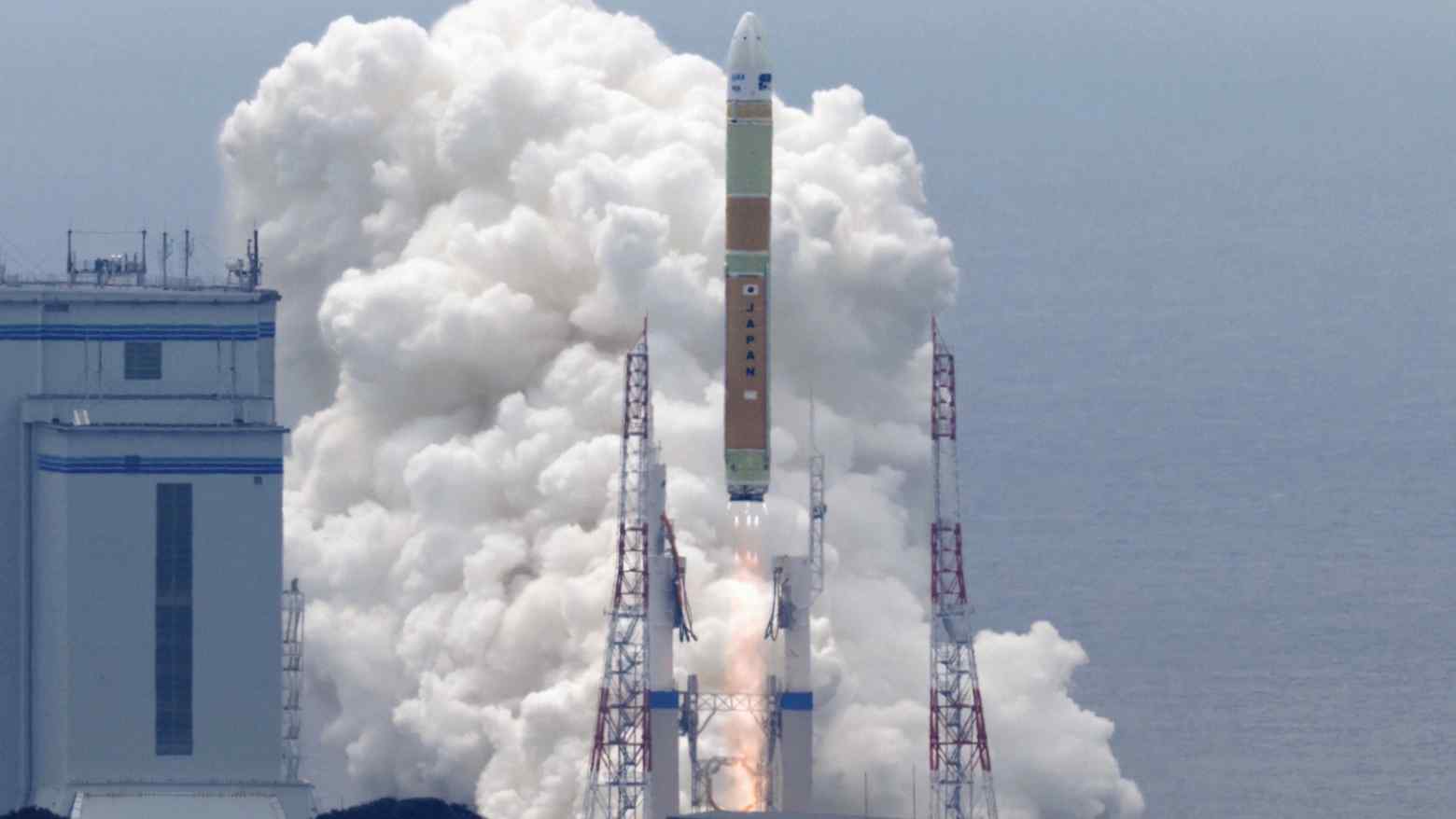
JAXA successfully completed a ground test firing of the Epsilon S M-35a solid rocket motor at Tanegashima Space Center. The test firing was a key milestone for JAXA in its effort to return the Epsilon rocket to regular flights. Epsilon is one of two rockets that JAXA has developed. The H3 is the flagship medium lift rocket that also recently returned to flight after a launch failure in December. The Epsilon series is its smaller, solid rocket counterpart that is used as both a sounding rocket and for sending small satellite payloads to orbit. The first stage is the same solid rocket motor that is used as a booster for the H3 and is seen as fairly reliable. For the next generation Epsilon S, JAXA had developed a new engine, dubbed E-21 for Stage 2. However, this new engine has failed in each of the last two tests. As a consequence, Epsilon rockets have not successfully launched since 2021, creating a years-long backlog of research and other small payloads waiting for a launch slot. The problem has been serious enough that JAXA has paid Rocket Lab to launch some of these payloads on Electron rockets from New Zealand, which is not a good look when having an autonomous, sovereign launch capability is a key objective of Japan's launch program. It's also not helping JAXA reach its goal of 30 launches per year by the early 2030s. So a few weeks ago, JAXA announced it would be returning to the previously successful Epsilon second stage motor, M-35. There are some improvements, so it's being called the M-35a. And because it's changing, it needs to be re-tested. Nothing blew up on the live broadcast of the 130 second test [YouTube], so that's good. JAXA has 250 measurement points for the test, though, so we'll have to wait and see if it passed all of the internal tests. In any event, JAXA wants to see a return-to-flight for Epsilon by the end of 2026.
-
Mitsubishi Heavy Industries and ispace have announced an agreement to use the H3 rocket to launch ispace's Mission 3 lunar lander mission [Nikkei Asia], scheduled for 2028. The first two ispace landers launched on Falcon 9, but the companies said the new arrangement creates Japan's first private lunar transportation system. SpaceX is also ramping down Falcon 9 launches and the number of slots is more limited in 2028 and 2029. The two companies did not disclose financial terms of the launch contract, although ispace noted the weak Japanese yen has made foreign launch vehicles more expensive. The announcement came days after ispace's European subsidiary won a $74 million ESA contract to complete development of a small robotic rover called MAGPIE that will fly on ispace's Mission 4 lander in 2029.
-
Seven next-generation Axelspace GRUS-3 optical Earth observation satellites were launched to 585km sun-synchronous orbit on the SpaceX Falcon 9 Transporter-17 from Vandenberg. All 7 satellites have reported nominal status after reaching their orbits. Once fully operational, the constellation will enable daily observations at latitudes above 25°N with 2.2m ground resolution, 28.3 km swath width, and max observation length of 1,356 km. These multi-spectral instruments capture the usual R, G, B, NIR plus Coastal Blue and Red Edge.
- Coastal Blue is a new spectral band for Axelspace - it enables capture of information just below the ocean surface, such as coastal topography and seagrass beds.
- The generic satellite bus was developed under a NEDO-funded demonstration program (FY2023–2026).
- Axelspaces’s previous launches have been individual satellites and demonstrators. This launch marks a significant change to a true constellation, increasing Axelspace's imagery capture frequency as well as enabling tasking
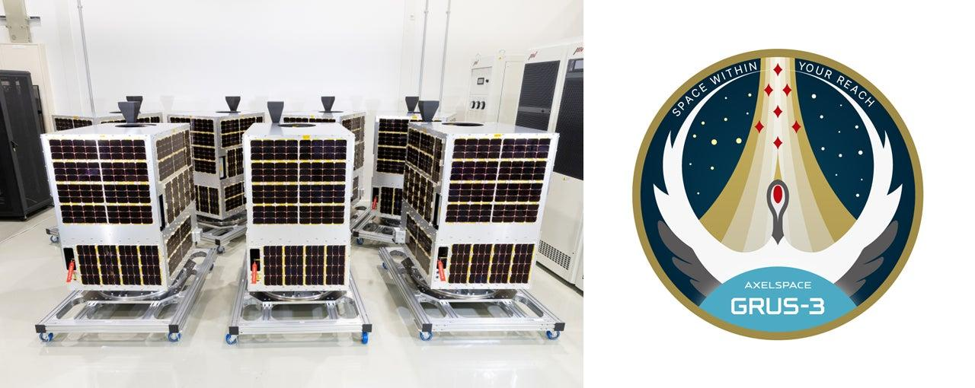
Axelspace GRUS-3 ready for launch. Source: Axelspace
- Bull Space has confirmed its first orbital success for 'horn' membrane debris deorbiting devices. Bull's two post-mission disposal devices – Horn-L at 20 sq m and Horn-R at 10 sq m) – launched June 12 on H3 No.6. Optical imaging by pace situational awareness firm HEO confirmed deployment of the membranes designed to increase drag. LeoLabs tracking data shows significantly faster orbital decay when compared to the Vertecs satellite launched at the same time. Bull claims the world's largest membrane target (50sqm).
- Space construction startup Space Quarters took first place at the IVS Launchpad 2026 competition held in Kyoto. IVS is one of two major startup competitions held in Japan each year, and it might be the most important. It attracts hundreds of startups each year, it's open to the public, and many of the top firms received funding as a result. Space Quarters won 10 million yen (~$65,000). They are developing a modular robot assembly system called "DAIQ" that enables construction of structures that are larger than the payload fairing on most rockets dimensions by deploying modular units that assemble structures in orbit rather than launching pre-assembled hardware. They beat over 500 applicants. Space Quarters was one of 15 finalists. Amongst those 15, there were three other space and geospatial firms:
- UMIAILE - maritime domain awareness using small, fast, uncrewed boats and satellite sensors
- Satelyx - VLEO orbital technology testing and demonstration platform to help startups develop flight heritage
- RoboTruck - autonomous cargo trucks
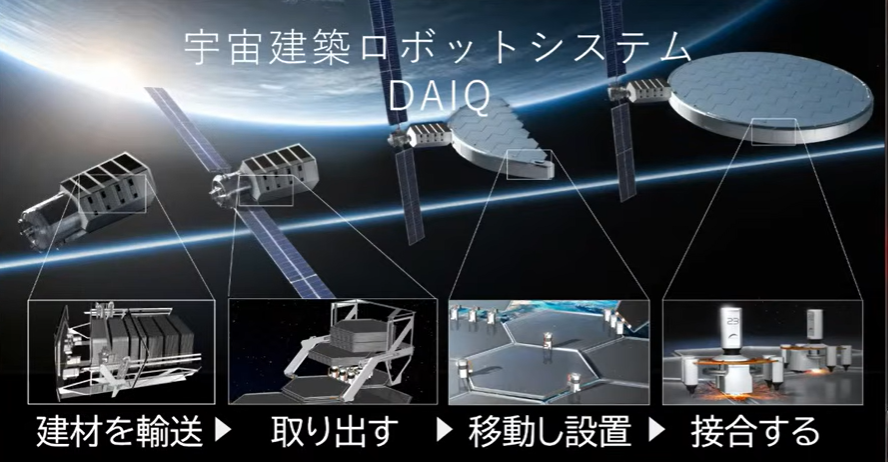
Rendering of the DAIQ space construction system. Source: Space Quarters.
- Aureon Space Systems, a Tokyo startup that just started operating earlier this year, has officially kicked off development of its asteroid resource exploration mission targeting a 2031 launch. The technical core of the firm’s approach is a propellant-free mass driver that uses local asteroid regolith as reaction mass to steer the spacecraft, at least partially bypassing the weight and mass limitations of chemical propulsion systems. An LEO technology demonstration satellite is planned for 2029, and ground-based integration testing [Aereon] of the acceleration and collection systems began this year. Aereon has also completed a patent filing for its mass driver [Aereon] technology. This is super-early stage, but it's exciting to see a Japanese startup setting its sites on such an ambitious project
- ispace has announced a new Lunar Access Integration service [Payload] that will provide integration and delivery services for payloads to the lunar surface for up to 500kg on future SpaceX Starship flights.They have targeted the first mission for around 2030. This gives ispace a heavy-lift lunar delivery path alongside its existing ULTRA lander program, significantly expanding their ability to fulfill government and commercial lunar missions.
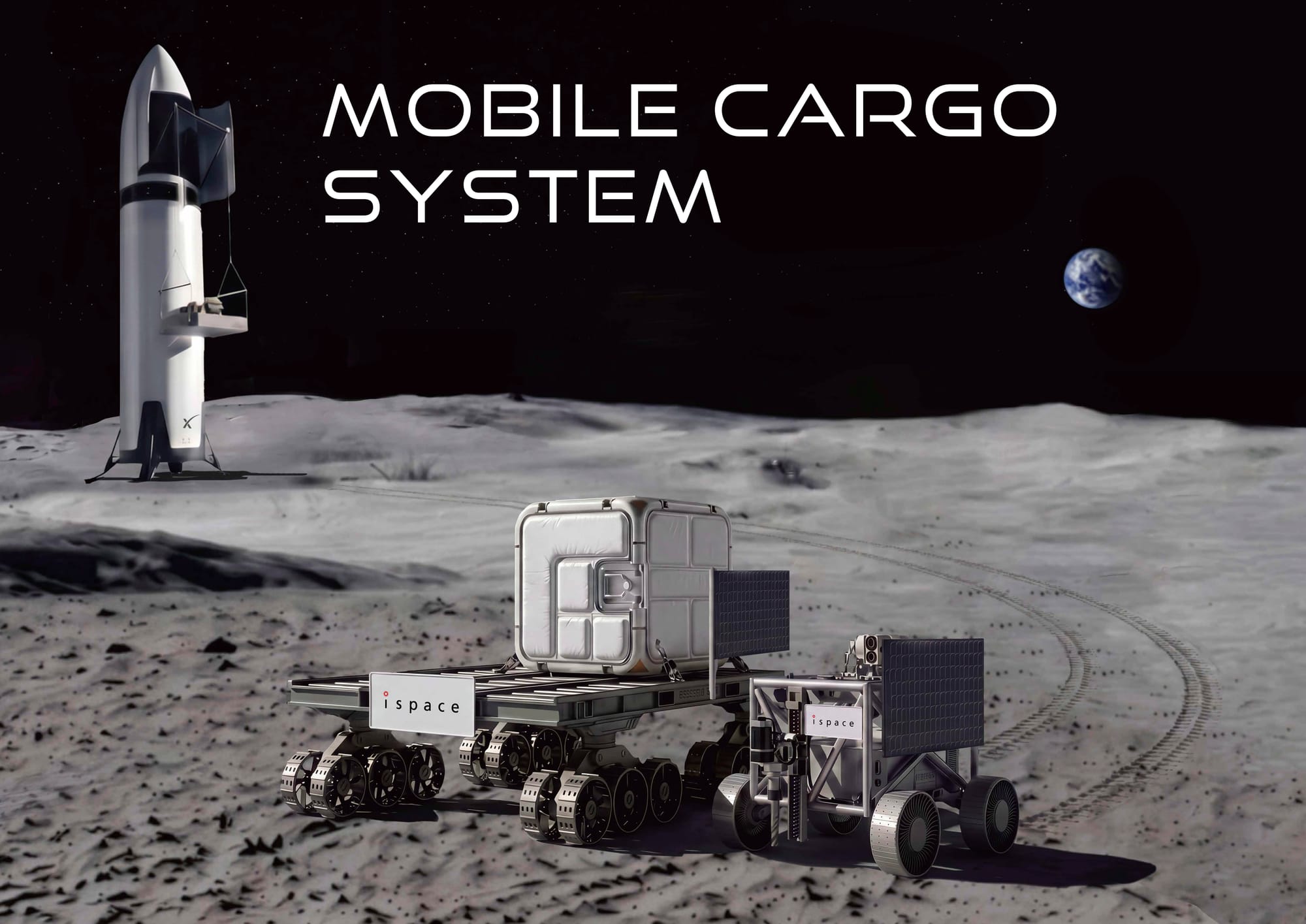
Mockup of ispace lunar cargo delivery service. Source: ispace
- Japan's parliament, the Diet, enacted legislation to reorganize and rename the Air Self-Defense Force (ASDF) to the Air and Space Self-Defense Force. The naming transition will be completed by FY2026 (end of March 2027) and will formally establish a new space operations group led by a lieutenant general to strengthen space domain awareness, satellite surveillance, and defense capabilities.
- SoftBank announced pre-commercial HAPS (High Altitude Platform Station) trials starting mid-August 2026. They will be using US firm, Sceye (US), which provides a lighter-than-air (LTA)-type aircraft, 65m in length using helium-buoyancy for up to 10 days flight duration. A single plane can provide coverage: 200km diameter. A Sceye test flight in the US in March and April achieved 88+ hours stationary loiter with 1km accuracy. SoftBank had previously announced their plans with Sceye in October last year, and they appear to be on track for a commercial service to roll out in 2027.
- It is worth noting that NTT DOCOMO and Space Compass have been testing a similar service using AALTO, an Airbus company that is developing the solar-powered Zephyr plane as both HAPS and Earth observation imagery. Japan also has a domestic firm, AstroWave Technologies, developing Terahertz communications technology aimed at HAPS and satellite usage
- Mitsubishi Electric has acquired all shares of Infostellar making it a wholly owned subsidiary. This deal will pair Mitsubishi's deep satellite hardware and antenna engineering with Infostellar's agile cloud ground-station platform (Stellarstation GSaaS cloud platform).
- What does this mean? As the first major M&A of a Japanese space startup, this acquisition is a milestone, and this type of exit represents a pathway for successful startups to achieve scale through partnerships and acquisitions, rather than the public markets. Acquisitions don't just help the startup firm, they provide exits for investors and employees with equity. This, in turn, cycles funding back into the ecosystem and enables experienced startup founders and executives to apply their expertise to new ventures. So acquisitions like this can be very good for the broader ecosystem. However, they can also concentrate power in the hands of large, legacy companies that may not support customers or innovate with the same agility that a startup would.
- At Spacetide, ALE CEO Reina Okajima presented the overhauled payload storage and feed mechanism for its Starlight Challenge. Two previous missions, ALE-1 and ALE-2 were launched in 2019 and successfully verified orbital maneuvers but did not end up deploying the metallic grains that create the artificial meteor shower due to concerns over contributing to orbital debris in LEO. The redesigned deployer called ALE-3 aims to transition the technology toward VLEO business applications.
- JAXA successfully demonstrated lightweight voice recognition AI aboard the ISS Kibo module. Built by ABEJA under a JAXA contract, the system enables astronauts to issue verbal commands (move, rotate) to the INT-BALL2 autonomous camera drone without a ground-station data link, which normally adds significant latency.
- Synspective is the first public Japanese space startup to turn a profit. Forbes Japan profiled Arai Motoyuki, CEO of Synspective, in its September 2026 issue. The profits are driven by the ¥96.07B (~$640M) five-year SAR constellation contract with Japan's Ministry of Defense signed in February 2026. Synspective's FY2026 guidance includes: projected sales of ¥6.35B (+167.3% year-on-year), net income of ¥2.62B. Most significantly, its order backlog is now at ¥124.39B. The company is targeting 30+ SAR satellites; the dual-use strategy uses a defense baseline to anchor development, then expands commercially and globally.
- KDDI and KDDI Smart Drone have demonstrated direct satellite-to-drone flight control via KDDI's au Starlink Direct service over Takahagi, Ibaraki, a mountainous area that is a mobile coverage dead zone. Now this is not the usual Starlink service. Normal Starlink service requires a Starlink antenna and delivers broadband. But newer Starlink satellites have what's known as "Direct-to-Device" (D2D) capability that enables mobile companies to provide some basic services, like texting and emergency services in remote areas with no cell coverage. T-Mobile has that license in the United States, but Starlink has licensed it to KDDI and NTT Docomo in Japan as well as licensing Skyperfect JSAT for the regular broadband offering. KDDI's experiment sends control signals and telemetry through Starlink. This is the first such use in Japan. The next phase of the program, which is funded by MIC's Regional Society DX program, will test handover between mobile and Starlink Direct, plus Beyond-Visual-Line-of-Site (BVLOS) operations in dead zones. Many of Japan's mountainous communities have little or no cell coverage with many dead zones. With as many disasters as Japan endures, the capacity to rapidly be able to deploy drones in disaster and search & rescue operations is a critical capability. The overall goal for this work is to create a capacity for nationwide drone dispatch within 10 minutes.
- JETRO, the Japanese export support agency, and Seraphim, the UK space tech investor, have launched a 5-month UK/Europe market access program. Ten Japanese space and deep-tech companies have been selected to receive support for European regulatory and procurement navigation, commercial relationships with aerospace/defense/industrial orgs, and institutional investor access. The selected firms include: Eight Knot, Errai, Letara, Minato Rocket, Ookuma Diamond Device, Orbitorus, Rumi Light, Solafune, Vision IV, and Warpspace. Geopolitics is driving a growing focus on sovereign capability and an accelerating investment in space technologies
- The Japanese Government released 13 regional industrial cluster plans for 7 regions. Hokkaido was designated for semiconductors, offshore wind, and rockets/launch sites. Kinki (Kansai) was designated for rockets/launch sites, flying cars, and bio/advanced medicine. These plans are aimed at promoting capital investment and infrastructure development in strategic growth sectors.
- SpaceData has won patents for physical AI simulation and fractional space asset ownership. Patent No. 7850469 is for high-precision physical simulation combining rendering with computational fluid dynamics to simulate air currents, pressure, and thermal fluctuations inside spacecraft like the ISS, and patent No. 7843533 is for fractional ownership trading and profit distribution systems for space assets, reducing capital barriers for smaller firms that are new the the industry.
💱 Contracts
- Rymansat Project, a Japanese community space group, has signed a launch agreement with Alba Orbital to launch RSP-P00, Japan's first PocketQube picosatellite. A PocketQube is a 5cm square satellite, half the dimensions of the standard 10cm cubesat. The smaller size and lower cost makes creating and launching a satellite more accessible to high school, university, and other development teams with fewer resources. The Rymansat Project is an all-volunteer Japanese group that creates open source satellite designs. This first RSP-P00 will host multiple radio communications payloads. Alba Orbital doesn't actually launch rockets, but it has developed the AlbaPod satellite deployer technology and contracts with rideshare missions like those provided by SpaceX. The Rymansat RSP-P00 is expected to launch in early 2028. The PocketQube form factor is
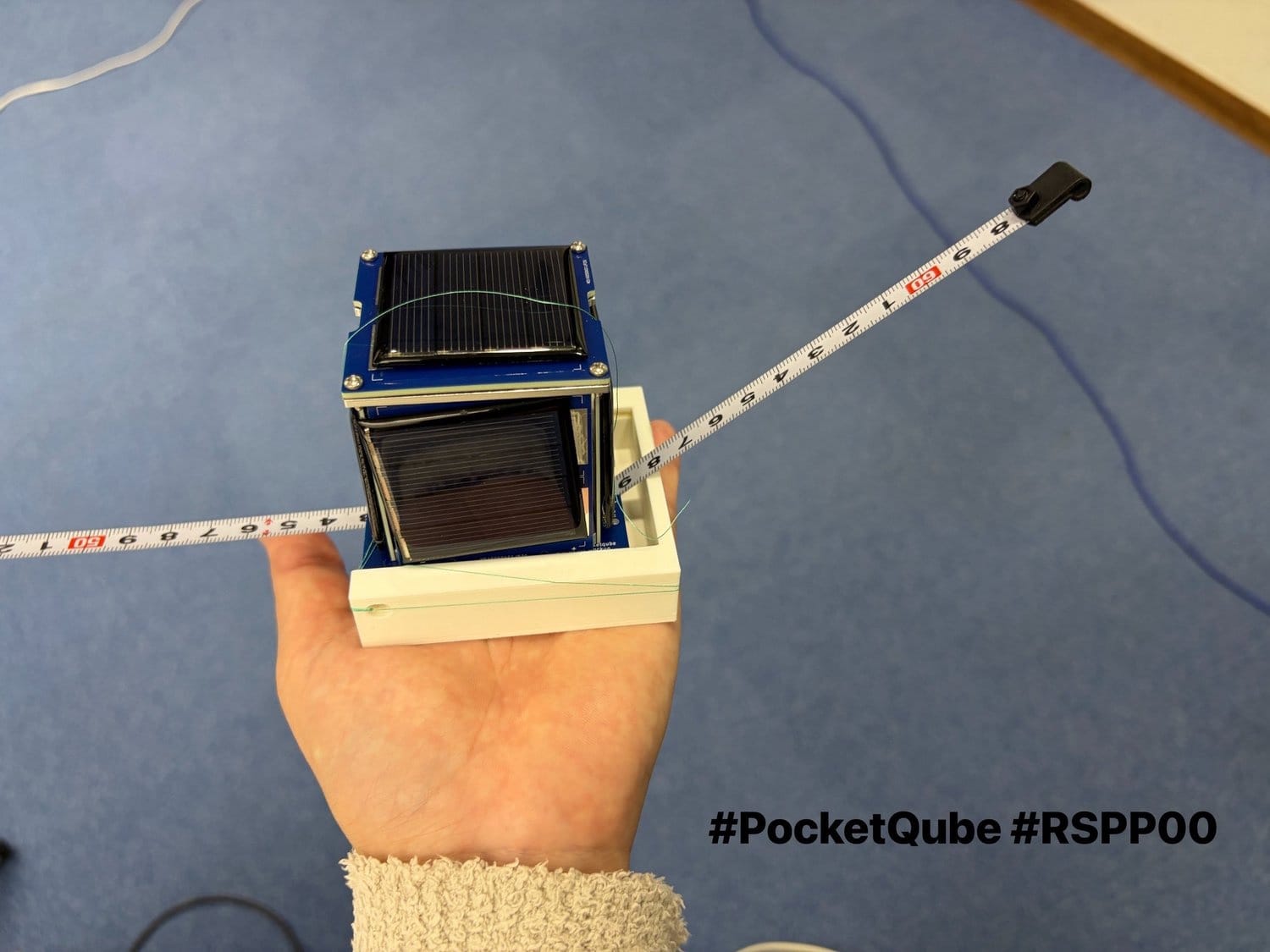
Photo of Rymansat PocketQube RSP-P00. Source: The RymanSat Project
- Japan Manned Space Systems (JAMSS) has signed an MOU with US-based Vast and Vast Japan to expand commercial LEO station operations in the Japan and Asia-Pacific region. JAMSS will manage microgravity mission design, astronaut training, and operational payload support including its Klabox cell culture device aboard the Vast Haven-1 space station, which is expected to launch in early 2027.
- SpaceData signed an MOU with Australian Inovor Technologies to collaborate on space situational awareness (SSA) and space domain awareness (SDA). SpaceData's SpaceBrain AI platform will link with Inovor's planned Hyperion SSA/SDA LEO constellation expected to launch in 2027.
- ArkEdge has signed a contract with Italian space logistics firm, D-Orbit, to provide a series of launches using its ION Satellite Carrier in 2027 and 2028. D-Orbit will send ArkEdge VDES (for maritime communications), IoT, and imagery satellites to sun-synchronous orbit. This deal was brokered by the trading company, Marubeni.
- ElevationSpace has signed an MOU with Luxembourg's Space Cargo Unlimited (SCU) for in-orbit processing. SCU makes a standardized 'Bentobox' autonomous experiment interface. This will be integrated into ElevationSpace's ELS-R re-entry capsule, aiming for launch around 2030. Successfully integrating these two capabilities will create an end-to-end orbital experiment and physical sample return service independent of ISS or other commercial space station efforts. ElevationSpace recently raised a $40 million round and has its next test flight of ELS-R is planned for 2027
- Seiren, SSC Space, and Infostellar have formed a partnership to support future EO satellites [SatNews]. Seiren is a really interesting company. They were founded 1889 as a textile and industrial materials manufacturer. Over the past decade, they have been extending their precision weaving and advanced polymer expertise into the aerospace market. This led to successfully launching a cubesat in 2021 and then development of a full-scale manufacturing pipeline for small satellites and SAR antenna arrays in collaboration with Synspective. This new agreement with SSC Space (formerly Swedish Space Corporation) and Infostellar will provide ground station services. Seiren is planning to launch a new satellite FUSION-1 and this agreement will provide them with the ground station network necessary to transmit images back to Earth.
- Axelspace signed a 4-year agreement with JAXA for the AxelLiner Laboratory (AL Lab) to support research on high-mobility electric propulsion systems. The 4-year agreement runs from FY2026. AL Lab leverages Axelspace’s short development cycles and mass-production capability to enable customers to validate satellite components in orbit.
- SpaceShift has signed a partnership agreement with NBJV (Nagase Thailand / B2G Solution JV) to distribute its SateAI satellite data analysis platform in Thailand. The platform is used for disaster prevention, agriculture, and infrastructure monitoring and sales efforts will focus on Thai government agencies.
- Sharp signed an MOU with SES to provide flat-panel satellite terminals for mid-Earth orbit (MEO) communications services. SES operates the O3b mPower MEO constellation at ~8,000 km altitude. These are high availability communications satellites. Sharp is developing a lightweight, flat-panel satellite terminals leveraging their smartphone engineering expertise. This will target industrial, maritime, mountainous, and autonomous vehicle clients where cellular coverage is poor. Sharp will not just develop the terminal hardware but also provide system integration and operations services for enterprises. Some of the cost is supported by a grant from the National Institute of Information and Communications Technology (NICT) with initial service targeted for 2027.
- NYK Line and Osaka University naval architecture and systems engineering department have signed a partnership agreement to develop offshore rocket recovery vessels [Kaiji Press] and motion-stabilization systems for reusable launch vehicles by leveraging funding from a JAXA Space Strategy Fund award.
- ispace and Sky Perfect JSAT has signed an MOU to evaluate JSAT Space Line - JSAT's commercial near-Earth tracking network - as a backup X-band downlink for the ULTRA lunar lander on Mission 3. The primary ground link will remain ESA's ESOC network, but JSAT Space Line will add physical redundancy. JSAT Space Line previously performed signal measurement tracking for NASA's Artemis II crewed lunar flyby. ispace also confirmed that Mission 3 has shifted from a 2027 to a 2028 launch target, requiring schedule realignment with METI's SBIR program administrators. -
- ispace announced that its US subsidiary, ispace US has mutually terminated the CP-12 lunar payload subcontract after NASA and Draper ended their prime Commercial Lunar Payload Services (CLPS) contract. Draper is a non-profit research organization that won NASA had previously indicated the contract was terminated because the lander redesign was pushing the launch to 2030 or 2031, but that NASA remains committed to the original science payloads (FSS seismometers, LITMS heat flow sensor, LuSEE-Lite electromagnetic fields) and will seek new CLPS rides for them. ispace says that the contract cancellation won't affect their financials because the lander project had already been delayed by the inability of the engine manufacturer to deliver on-time and on spec. They have also said they plan to pursue future opportunities with NASA under the CLPS 2.0 RFP that was released in April.
- BULL Space has signed an orbital demonstration agreement with Bulgaria's EnduroSat to fly its passive PMD device 'HORN' on a 16U satellite that will launch on the SpaceX Transporter-22 in 2027. HORN uses a deployable membrane to increase atmospheric drag for propellant-free deorbit after a mission ends. The goal for Bull is to become a certified deorbit supplier for EnduroSat's platform.
- IHI and Finland's Kuva announced an MOU to explore building and operating Kuva's Hyperfield-2 satellites [IHI], including potentially manufacturing them in Japan. About 20 Hyperfield-2 satellites would be enough to provide daily coverage of about 20 million square kilometers across Japan, neighboring countries and surrounding ocean areas. IHI has already begun to procure SAR satellites from ICEYE and thermal imaging satellites from Satvu as well as radio frequency and VDES satellites. Kuva is only just starting to operate the Hyperfield-2 satellites, and they plan to operate a constellation of as many as 100 in the future. The new Hyperfield-2 satellites will add short-wave infrared (SWIR) to the very near infrared (VNIR) wavelengths supported with the previous version.
- ispace-EUROPE has been awarded a €65 million ESA Phase 2 contract for the MAGPIE lunar rover. The Mission for Advanced Geophysics and Polar Ice Exploration (MAGPIE) will be ESA's first lunar rover. The new contract will cover the remaining rover and payload development, manufacturing, testing, transport, and surface operations. The Phase 2 contract started July 1 following completion of the Design Prototype Review phase. MAGPIE will investigate south polar water-ice stability and regolith and is expected to fly on ispace's Mission 4 lander in 2029..
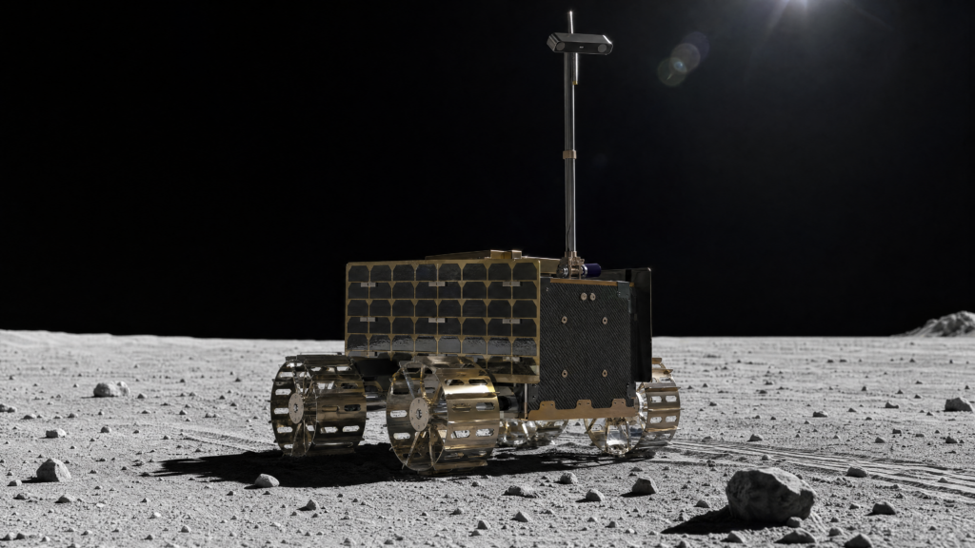
Artist rendering of the MAGPIE on the lunar surface. Source: ispace
- DigitalBlast has reserved space on the Starlab space station. This is the second Japanese company reserving commercial space station capacity. The intended payload is an onboard computer being developed under a JAXA Space Strategy Fund project for on-orbit data center technology, led by DigitalBlast affiliate SpaceBlast. DigitalBlast also develops microgravity life-science R&D equipment and platform services. The first company to reserve space was Mitsubishi Corporation in January 2026. Mitsubishi is also a key investor in Starlab.
- JAXA signed two contracts aimed at using water as a propellant source for future lunar operations:
- Kurita Water Industries as been selected to test water purification components for a lunar propellant production plant [PR Times]. Kurita will test removal of ammonia and methanol from simulated lunar-regolith-derived water, evaluate degradation factors, and conduct long-duration performance tests. This is a short-term contract, and results are due to JAXA within FY2026. This continues Kurita's prior 2024-25 JAXA selections under the same funding program.
- JGC Global has been selected to design a demonstration propellant production plant, assess operational and construction risks, support international-agency technical studies, and conduct water-extraction experiments using hydrated lunar-regolith simulants. This work will also be completed in FY2026 and advances prior basic conceptual and design work FY2023-25.
- Following another successful launch of a QPS-SAR satellite, iQPS and Rocket Lab announced another contract to launch three additional iQPS satellites on Electron rockets. This is the third multi-launch contract iQPS has awarded Rocket Lab in the last year, bringing the total number of Electrons ordered to 18.
💴 Equity Funding
- Space Renaissance, a new rocket engineering startup, and Quontier, a Tokyo-based consulting firm, have formed a capital and business alliance. Space Renaissance specializes in specialising in rocket design support, mission analysis, and flight safety analysis. The Quontier CEO will join the Space Renaissance board to lead commercialization -
- SolaNika raised a seed round for laser wireless power transmission [The Bridge] targeting drones. SolaNika is a spinoff from Tokyo Institute of Science and the round was led by Incubate Fund with a Mizuho Bank debt facility. The funds will support a flight demonstration of continuous laser wireless power transmission to hovering drones by late 2026. Their longer-term target is to be able to power HAPS platforms and lunar exploration rovers. Internationally, PowerLight Technologies in the U.S., Aquila Earth in Australia, and ORiS in Italy are all pursuing various approaches to distributing power via lasers.
- Space Tech Accelerator has raised ¥200M (~ US$ 1.3 million) seed round for satellite-data palm oil supply chain verification. The seed round was led by Frontier Innovations.
- Star Signal Solutions has raised ¥450M seed round for space debris tracking. Star Signal was founded by JAXA alumni specializing in orbital mechanics and optical tracking. The seed round was led by JAFCO. It is also backed by an ¥2 billion from JAXA's Space Strategy Fund Phase 2. The company is building a global observation network targeting sub-10cm debris, with a large-scale radar deployment site in Australia already in progress.
- Astroscale has raised ¥30.6 billion for development of an on-orbit servicing fleet and the LEXI-P mission currently targeted for 2028. The funding is based on convertible bonds and equity from Hulic and Sky Perfect JSAT. The funds will be directed toward Japan/UK production expansion and the LEXI-P life-extension spacecraft.
- Axelspace has negotiated an easing of its bank covenants in order to provide greater financial flexibility as it scales its operations. Axelspace just went public less than a year ago. They have been forced to renegotiate ¥2 billion in overdraft and loan commitment facilities with Mizuho Bank, delaying profit covenants from FY2027 to FY2029. Six-month revenue through May 31 fell 38% YoY (564M yen vs 921M yen), with operating losses widening on satellite test model costs, staff scaling, and shifting government contract revenue recognition.
- Mitsubishi Electric has allocated US $10M as lead investor in Array Labs' $21M strategic round. Array Labs is a US-based radar specialist that develops modular space-based radar with airborne moving target indication (AMTI). This technology is aimed at potentially tracking ballistic missiles and aircraft from LEO, independent of ground radar. Array Labs is readying radar satellite launches aimed at 2027 and 2028. MELCO sees a substantial market for maritime and aircraft tracking services for national security customers across the Asia-Pacific. This follows on MELCO's acquisition of Infostellar and its ground-station services.
🔭 Science
- JAXA and Tohoku University have demonstrated lunar soil fertilizer synthesis from ambient air using plasma [Phys.org]. Researchers grew rice seedlings in lunar regolith simulant using nitrogen fertilizer synthesized from ambient air with a 100-watt portable plasma device. The process generates dinitrogen pentoxide gas, neutralizing the alkaline lunar soil and unlocking plant nutrients.
- Why does this matter? Ensuring sustainable food supplies is a key challenge for long-term human exploration and potential habitation of the moon. The moon's soil does not contain any organic material, and essential plant nitrogen sources like ammonia and nitrate are virtually nonexistent. This technology would enable use of as a raw material, and plasma generated by electricity from solar cells is utilized to synthesize N₂O₅. The synthesized N₂O₅ is then supplied as a nitrogen fertilizer, enabling the cultivation of crops on the moon.
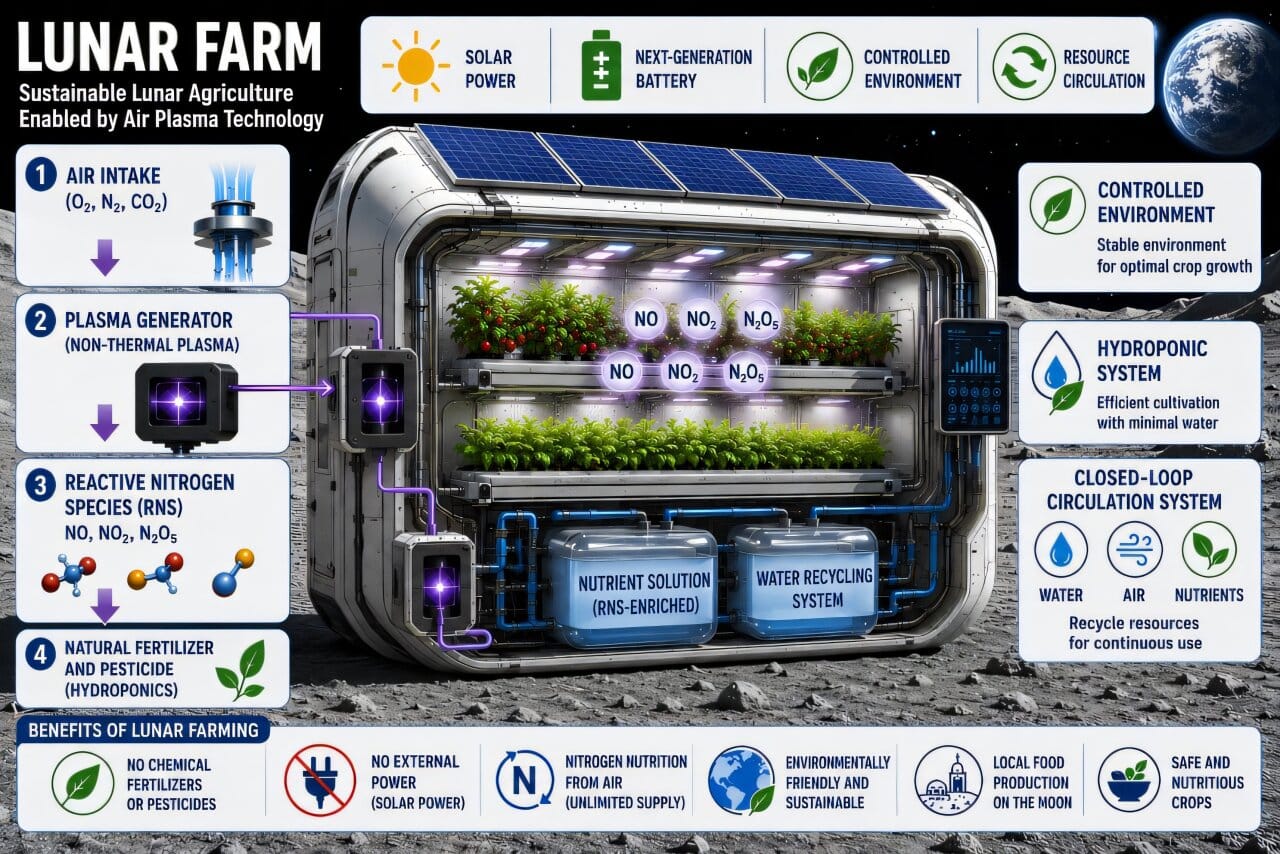
Schematic illustration of a plasma-based lunar agriculture system. Source: Toshiro Kaneko
- Tokyo Metropolitan University and Tottori University have developed a system that can generate a strong pulsed magnetic field that can be used to slow the atmospheric reentry of a spacecraft. Atmospheric reentry generates very high heat as the spacecraft strikes the atmosphere at high speed. Current systems rely on heat-resistant tiles or other ablative materials that protect the spacecraft from the heat. However, these systems result in erosion, delamination, and other damage that prevent reuse or require significant repair. An “active” heat shield would rely on a magnetic field that uses the Lorentz force generated by the interaction between the ionized plasma in the forward shock wave with an actively generated magnetic field, expanding the shock layer and both reducing heat flux to the spacecraft and increasing the aerodynamic drag. Past experiments with magnetic heat shields (in the jargon, “magnetohydrodynamic (MHD) aerobraking) have relied on permanent neodymium magnets to generate the field. However, this limits the strength of the magnetic field and limits the field shape to the geometry of the magnets. Instead of physical magnets, the research team generated a magnetic field by supplying a large current to a coil in short pulses. The short pulses are used to reduce the cooling requirements of generating the field and also provides far greater flexibility in terms of the magnetic field’s geometry. They were able to generate a 1.58 tesla (T) magnetic field in a Mach-7 airflow, more than double the previous best of 0.7T for physical magnets. This work could form the foundation for a future reentry capsule flight demonstration. The results were published in the Journal of Spacecraft and Rockets.
🗺️ International Collaborations
- Japan and Singapore sign bilateral space cooperation pact - JAXA and Singapore's newly formed National Space Agency (NSAS) signed a Memorandum of Cooperation on July 6. This is NSAS's first bilateral space agreement. Singapore also joined JAXA's co-funded Business Promotion Framework as its third international partner (after UK and France). Other deals signed at the same time included:
- Sky Perfect JSAT is partnering with Singapore's Speqtra on quantum cryptography for satellite communications
- Warp Space is partnering with Transcelestial Technologies on interoperable laser links for satellite network
- Fusic and NTU Singapore signed an MoU on cloud/AI ground station technology - Fusic is cloud technology integrator based in Fukuoka. The MOU is with Nanyang Technological University's Satellite Research Centre (SaRC) to co-develop 'future ground station' technologies. The partnership integrates AWS cloud infrastructure and generative AI to automate multi-satellite tracking, real-time telemetry analysis, and anomaly detection for small-satellite constellations.
- A new Japan-Ukraine Drone Cluster has been launched. The new platform connects Ukrainian drone combat experience with Japanese, Taiwanese, and ASEAN social infrastructure and disaster prevention. An early focus area of the initiative will be autonomous flight in GPS-denied environments (which could be a battlefield but also could be a mountainous region), multi-drone search and rescue, disaster response, secure communications, and maritime/underwater infrastructure inspection. The framework aims to bridge tactical conflict lessons with commercial logistics and public safety operations across Asia-Pacific.
- At a Japan-India Bi-lateral Summit, several agreements were announced, including:
- ispace partnerships with Diganterra and HEX20 Labs
- Infostellar partnership with Pramatra Space (QKD) and XDLINX small sat bus platform
- Takasago Electric partnership with Manastu Space Technologies, which developed “green tech” thrusters for satellites.
- Sagri, a Japanese firm developing satellite data analysis and AI/ML for field monitoring, crop survey, and other agricultural operations) is partnering with Taskmonk Technology (which provides training data pipelines) and Testing Xperts (AI-based software testing)
- China's Ministry of Commerce has added 20 more Japanese entities to its export control list and 20 more to its watch list [Asia Times], bringing the total to 80. Targets include affiliates of Mitsubishi Electric, Fujitsu, and NEC Aerospace, all of which have deep space and aerospace industrial links. The designation effectively blocks dual-use goods and acts as a de facto rare earth shipment ban for these firms. Rare earth and other critical mineral shipments from China to Japan have plummeted since January, when the first wave of export controls were rolled out.
- The Society of Japanese Aerospace Companies (SJAC) and UK Aerospace Defense & Security (ADS) signed a defense industry MOU at the Farnborough Airshow covering networking, sharing R&D/production best-practices, and enhanced government-industry dialogue. This builds on a 2023 government-level Japan-UK reciprocal access agreement and the 2024 Hiroshima Accord -
🎥 Videos
JAXA
📝 Reports and Datasets
- JAXA AMSR3 begins sensor distribution [X/Twtter] from GOSAT-GW - The AMSR3 microwave radiometer on the GOSAT-GW (Ibuki GW) satellite has started official data distribution for water cycle observations. Launched in June 2025, this new data supports weather forecasting, fisheries, and ship navigation.
- Microbase has released an open dataset for sub-municipal vacant house rates. The new dataset has town/block-level vacant house rate estimates calculated via random forest model. It was trained on Toyoda City visual inspection survey, regressed against census demographics, and then aligned to national land GSI base tiles. The data is published as open data under CC BY-ND 4.0.
📆 Asia-Pacific Conferences & Events
This newsletter is mostly focused on Japan, but I also like to highlight events across the Asia-Pacific region. Some upcoming conferences include:
September 2026
- 35th Congress of the International Council of the Aeronautical Sciences (ICAS) - 13 - 18 Sep - Sydney, Australia
- 27th CODH Seminar (第27回CODHセミナー) - Creating and Using Historical Big Data - 18 Sept 2026 - National Institute of Informatics, Tokyo, Japan
- Planetary Exploration Workshop 2026 (惑星探査ワークショップ 2026) - 24 Sep - Sagamihara, Japan
- 2nd OPENS International Scientific Workshop (第2回 OPENS国際科学ワークショップ) - 28 - 29 Sep - Sagamihara, Japan
- Japan-Cambodia Space Economy Co-creation Symposium 2026 - 28 - 29 Sep - Hyatt Regency, Phnom Penh, Cambodia
- EARTHBRAIN Technology Conference - 29 Sep -
- 25th Australian Space Research Conference (ASRC 2026) - 29 Sep - 1 Oct - Adelaide, Australia
October 2026
- New Zealand Aerospace Summit 2026 - 1 - 2 Oct - Christchurch, New Zealand
- 39th MEWS - JAXA Microelectronics Workshop 2026 - 1 - 31 Oct - Tsukuba, Japan
- Code for Japan Summit 2026 - 3 Oct - Chiyoda-ku, Tokyo
- 12th International Seminar on Aerospace Science and Technology (ISAST) - 6 - 8 Oct - Yogyakarta, Indonesia
- IEEE Asia-Pacific Geoscience and Remote Sensing Symposium (AP-GARSS 2026) - 11 - 14 Oct - Qingdao, China
- 47th Asian Conference on Remote Sensing (ACRS 2026) - 12 - 16 Oct - New Delhi, India
- Space Summit Asia-Pacific 2026 - 13 - 14 Oct - Narita/Tokyo, Japan
- Hokkaido Space Summit - 14 - 16 Oct - Obihiro, Hokkaido, Japan
- Space Innovation Challenge 2026 - 26 Oct - Bangkok, Thailand
- Space for Island Nations Conference (SINC) - 26 - 28 Oct - Malé, Maldives
- 10th Global Moon Village Workshop & Symposium - 26-27 Oct - Bangkok, Thailand
- Asia-Pacific International Symposium on Aerospace Technology (APISAT 2026) (第64回 飛行機シンポジウム) - 27 - 29 Oct - Sapporo, Japan
- 32nd Asia-Pacific Regional Space Agency Forum (APRSAF-32) - 27 - 30 Oct - Bangkok, Thailand
- UN/Pakistan International Conference on Leveraging Space Technology for EW4All, Climate Action and Disaster Risk Assessment - 27 - 31 Oct - Islamabad, Pakistan
- JSASS Annual Meeting 2026 - 28 - 30 Oct - Sapporo, Japan
- Thailand Space Expo 2026 - 28 - 31 Oct - Bangkok, Thailand
If you’ve made it this far, thank you for reading. Please be in touch via LinkedIn with any feedback, questions, comments, or requests for future topics. And if you have a friend or colleague that you think would enjoy JEO, please share it!
Until next time,
Robert
Bright red, bright red,
the sun shines heartlessly, but
there is an autumn wind.
–- Matsuo Bashō (1644-1694) - translated by Donald Keene
あかあかと
日はつれなくも
秋の風
aka aka to
hi wa tsurenaku mo
aki no kaze