JEO 18 - News Roundup - 30 July 2026
Topping this news roundup, Synspective has two more satellites in orbit and Axiom Space has opened a Japan office, plus the usual funding and contract announcements.
Welcome to Japan Earth Observer (JEO), a newsletter about the space, Earth observation and geospatial industries in Japan.
Topping this news roundup, Synspective has two more satellites in orbit and Axiom Space has opened a Japan office, plus the usual funding and contract announcements, science, international collaborations, and conferences.
I will be in Japan in mid-August in order attend FOSS4G Hiroshima 2026 as well as help organize a few additional events that I invite you to consider attending:
- Cloud Native Geospatial (CNG) Japan - Mon, 24 August - JAMSTEC, Yokohama - a half-day community meetup in Tokyo with demos, conversation, and a social reception. Registration is now open.
- STAC Japan Code Sprint and Workshops - Tue 25 Aug - Thur 27 Aug - JAXA Tsukuba Space Center. This second event is actually three-in-on. There will be a. The first day is a code sprint. Day 2 is a workshop for STAC producers and Day 3 is a workshop for STAC data users. Advance registration is required.
- Cesium DevDay Japan - *Wed 19 Aug - XXXXX - A mini-conference around the Cesium 3D visualization ecosystem, which has a lot of partners and users in Japan.
These are going to be great events, and I'm looking forward to both connecting with friends and meeting new folks in the geospatial open source and open data community.
On to the news…
News & Announcements
🛰️ Technology and Infrastructure
- Synspective’s Strix 9 satellite (aka "Viva La StriX”) was launched by Rocket Lab on 22 May to a 572 km orbit and 44.8° inclination and Strix 10 (aka “Ten Owl of Ten”) was launched [Space.com] on 27 June (NZST and JST) )to a 552 km orbit at 42° inclination.
- Axiom Space, the commercial space station aspirant, will be opening a subsidiary in Tokyo headed by former Japanese astronaut Wakata Koichi (currently Axiom's CTO). The hope is that a Tokyo office will boost collaboration with Japanese companies. Trading house Mitsui & Co is a major investor in Axiom. Other Japanese collaborators include Resonac Holdings, which does R&D and manufacturing with semiconductor materials.
- JAXA and AstroX kicked off a joint business demonstration phase under JAXA's J-SPARC [JAXA] (JAXA Space Innovation Partnership) program. AstroX will leverage JAXA’s balloon systems to develop a Rockoon: a rocket that can be launched from the stratosphere suspended from a balloon. The rocket system was successfully tested on the ground earlier this year, and the JAXA support will enable testing in simulated stratosphere environment as well as scaled testing.
- SKY Perfect JSAT will build a new satellite network control center in Minami-kan-machi, Kumamoto. The new center will join the existing national network of control facilities in Yokohama, Ibaraki, Yamaguchi, Hokkaido, and Okinawa and will support both GEO and LEO satellite communications services.
- An amended Meteorological Business Act (気象業務法) came into effect on 29 May. The revised law strengthens regulations on “unauthorized foreign entities” providing weather forecast services in Japan, introducing mandatory designation of domestic representatives and public disclosure of non-licensed operators. Five major Japanese private-sector meteorological companies - Weathernews Inc., Weather Map Co., Nihon Kisho Co., Japan Meteorological Association, and Hallex Co. - issued a joint statement endorsing the newly strengthened lack of foreign competition in the name of “reliability and accuracy of weather information”.
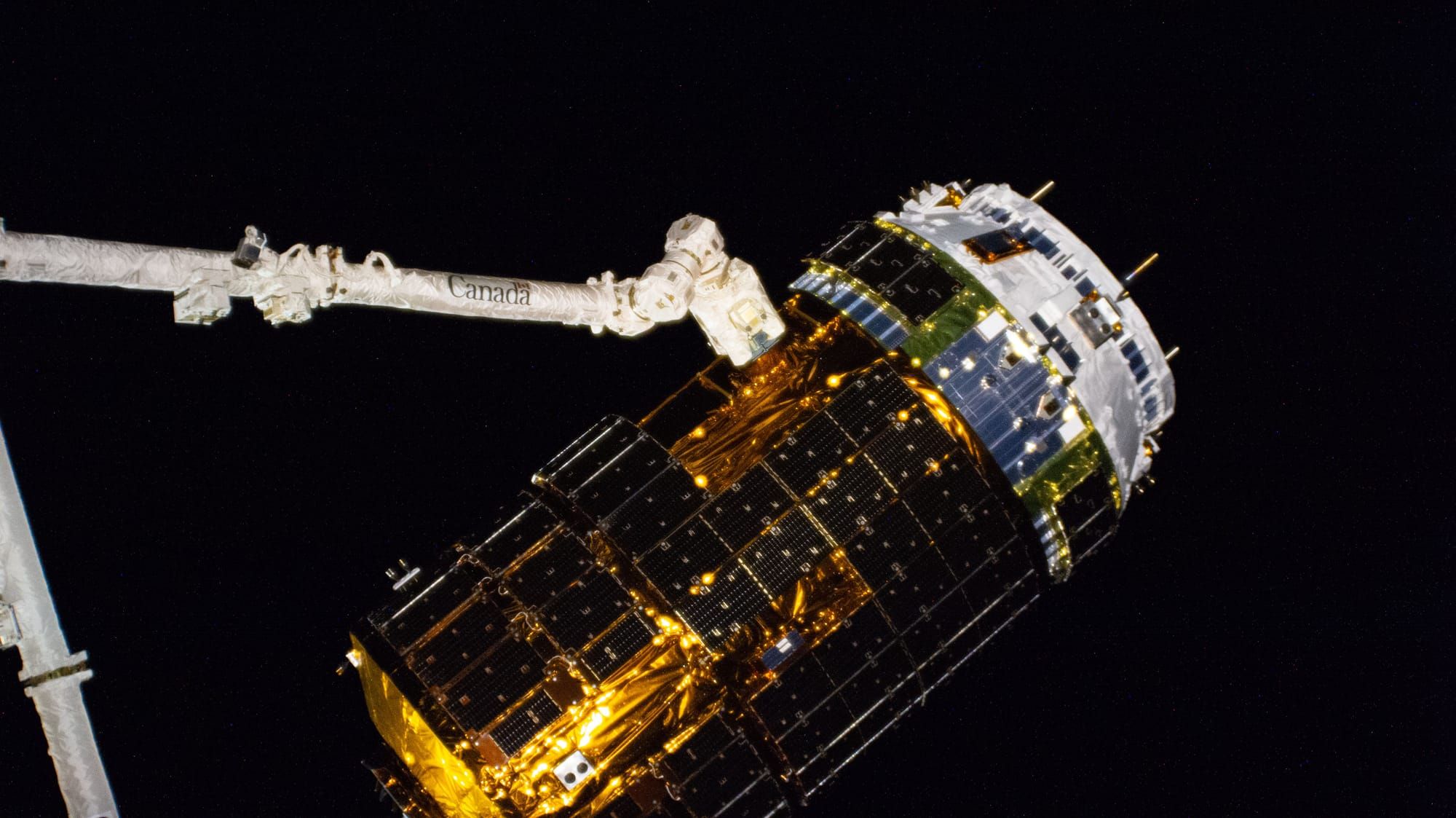
- Old things become heritage. The Japan Society for Aeronautical and Space Sciences (JSAS) (日本航空協会) certified five historic space vehicles as Aerospace Technology Heritage (航空宇宙技術遺産) [JAXA]. The designation covers the H-IIA rocket, its heavy-lift counterpart H-IIB, the Kounotori HTV cargo spacecraft, the Ryusei re-entry capsule, and Kiku-2 (Japan's first geostationary satellite, launched in 1977). JSAS designates groundbreaking products and technologies that have shaped the history of aerospace technology development in Japan.
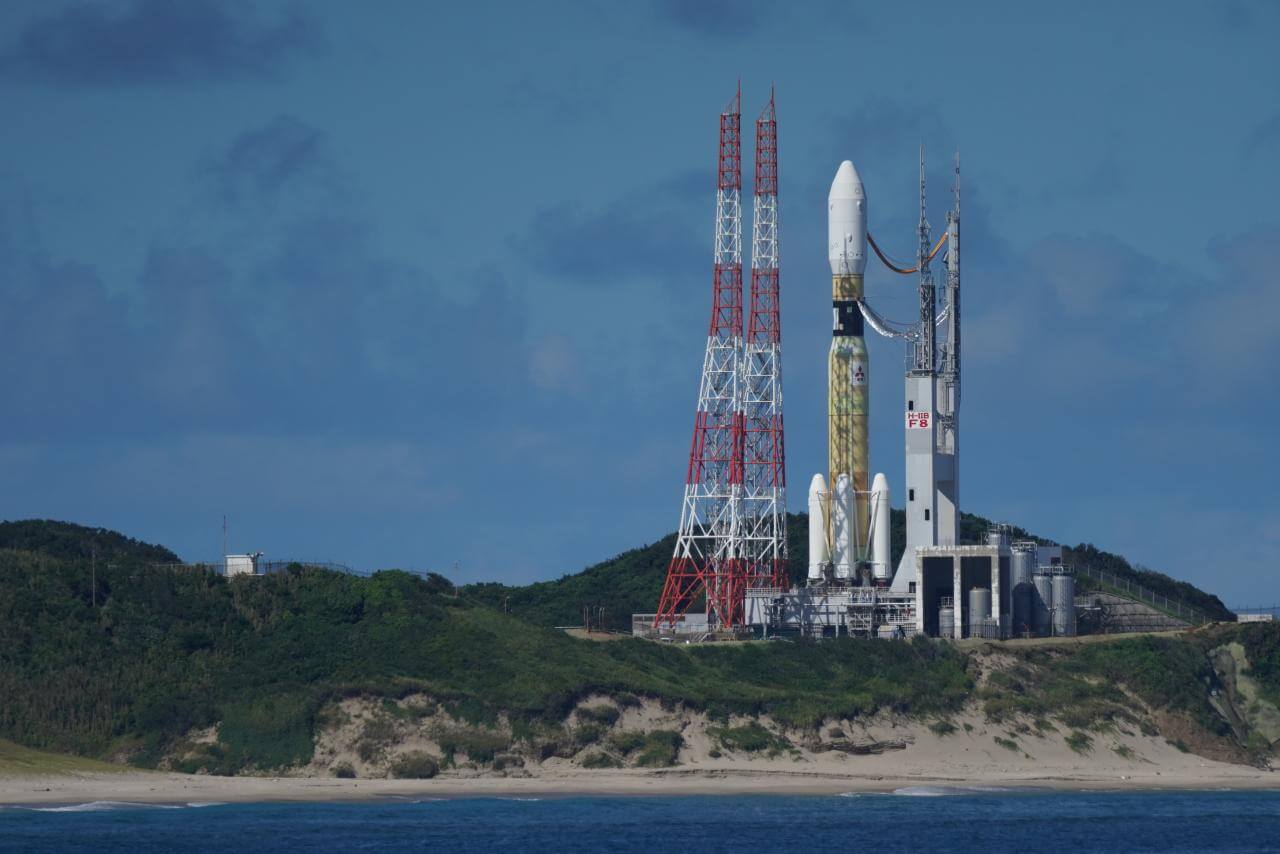
H-IIB No. 8 on its launchpad. Source: Shintarou / Wikipedia CC BY-SA 4.0
💱 Contracts
- ElevationSpace and Japan LEO Shachu (日本低軌道社中) signed an MOU to develop an integrated launch-supply-experiment-return workflow [PR Times]. The goal is to develop a Japan-led LEO ecosystem after the ISS retires. ElevationSpace is developing ELS-RS (Earth Low-orbit Return Service), a small unmanned cargo re-entry service. Japan LEO Shachu, which was founded in 2024 by Mitsui & Co. and is now also owned by Mitsubishi Heavy Industries and Mitsubishi Electric, is involved with developing a future LEO science module and a cargo resupply vessel (HTV-XC). Both projects are funded under Japan's Space Strategy Fund (宇宙戦略基金). These and related efforts are aimed at enabling Japan to build an autonomous, internationally competitive LEO infrastructure for the post-ISS era.
- Synspective signed partnership agreements with:
- SkyFy, which runs a platform that aggregates access to many EO satellite imagery providers as well as enabling its customers to task satellites. By integrating with SkyFi, Synspective puts its imagery in front of more users; it’s a new distribution path.
- e-GEOS (owned 80% by Telespazio/Leonardo Group and 20% by the Italian Space Agency) to jointly develop advanced geospatial intelligence solutions by integrating Synspective's StriX SAR satellite data with e-GEOS's COSMO-SkyMed constellation data, leveraging multi-sensor platforms, AI-driven analytics, and value-added processing. The partnership combines StriX's inclined-orbit constellation advantage in equatorial region monitoring with COSMO-SkyMed's dual-use heritage, collectively targeting commercial, civil, and national security markets globally.
- SKY Perfect JSAT has signed an reseller agreement with Amazon Leo, Amazon's satellite broadband service, JSAT plans to integrate Amazon Leo's capabilities with its own GEO satellite assets and operational expertise to offer hybrid, resilient connectivity solutions for remote locations, disaster response, backup communications, and mission-critical operations.
- GITAI USA, a subsidiary of GITAI Japan has been selected by the U.S. Space Force Space Systems Command (SSC) for the Space-Based Interceptor (SBI) program, which aims to counter advanced maneuvering threats in orbit. GITAI is among a limited group of companies chosen through a competitive evaluation to develop space-based interceptor systems and associated satellite platforms for national security missions. GITAI can claim on-orbit heritage, including ISS technology demonstrations and the successful deployment of its in-house 16U satellite platform in LEO.
- ispace has signed payload services agreements with
- University of Leicester to fly a Raman analytical spectrometer to the lunar surface on a future ispace ULTRA lander mission. Funded by the UK Space Agency (UKSA), the instrument is designed to determine the molecular composition of lunar regolith and identify resources (like minerals, volatiles, and water ice) relevant to future lunar exploration.
- JALUX, the trading arm of Japan Airlines (JAL) to begin selling payload transportation capacity to private companies and local governments. The collaboration is commercialised as the "ARGO PROJECT" (formally "The ARGO Trans-Lunar Heritage Project"), under which JALUX will develop a dedicated lunar transport container, the "Möbius Ark" for carrying cultural artifacts, regional specialties, and products representative of local Japanese communities to the lunar surface for preservation for future generations. JAL will coordinate collection of items from local governments and companies across Japan.
- Infostellar (株式会社インフォステラ) and XDLINX Space Labs (Hyderabad, India) have signed a Memorandum of Understanding (MOU) to integrate their respective capabilities across the full satellite mission lifecycle, from design through on-orbit operations. Under the partnership, XDLINX's end-to-end satellite manufacturing and mission integration services will be augmented by Infostellar's global ground station network (operated via its cloud-native StellarStation platform) and Launch and Early Orbit Phase (LEOP) support.
- Ocean Eyes, a Kyoto-based marine technology startup, announced a partnership with Ocean Economy AI Lab, a newly established AI startup in the Republic of Mauritius. The collaboration aims to launch a "Smart Fishing" initiative that integrates Japanese satellite data, ocean simulation models, and AI technology with local fishing data and community networks to promote sustainable fisheries in Mauritius. A proof-of-concept (PoC) is currently underway with approximately 30 local fishers, with plans to build an ocean data infrastructure and expand operations based on PoC feedback.
- Tenchijin signed a strategic partnership with French water management company Aqualter, marking the first deployment of Tenchijin's satellite- and AI-powered leak detection platform KnoWaterleak in France. KnoWaterleak will be deployed in Aqualter's long-term water service operation for the metropolitan Chartres area. Separately, both companies signed a reseller agreement making Aqualter an official distributor of KnoWaterleak in the French market. The partnership also targets expansion to other Aqualter-managed projects across France.
- Weathernews and JR West announced a trial for a jointly developed "Railway Weather AI Agent" designed to address intensifying weather-related risks to railway operations. The system combines Weathernews' proprietary observational network, meteorological analysis technology, and precipitation forecasting data with JR West's railway operations expertise and generative AI. The initial focus is on short-duration heavy rainfall (“guerrilla downpours”). When predicted rainfall is forecast to exceed operational thresholds, the system will automatically notify rail control operators. Weathernews plans to expand the agent to other railway operators and broader infrastructure sectors following validation.
- Oceanic Constellations and Nippon Yusen Kabushiki Kaisha (NYK Line) signed a memorandum of cooperation for the joint development of offshore rocket launch and recovery systems [Space Media]. Oceanic Constellations develops autonomous surface vessels (USVs) and aims to deploy multi-USV ocean constellations for maritime monitoring.
💴 Equity Funding
- Astroscale and SKY Perfect JSAT closed an investment deal that will have SKY Perfect JSAT invest ¥800 million (~ US $5.2 million) via third party allotment of shares [SatNews] as part of a ¥30.6 billion (~ US $197 million) growth financing round. Astroscale will use the new capital to fund expansion of its facilities. Astroscale is a global leader in on-orbit servicing, including satellite inspection, repair, and life-extension. JSAT brings satellite fleet operations expertise, ground station infrastructure and global partner networks that will enhance Astroscale’s growth opportunities.
- What does this mean? SKY Perfect JSAT is in a hurry to shift its capital allocations from its legacy broadcast and communications satellite business toward new ventures with greater growth potential. The investment in Astroscale arrives alongside other recent investments like the new JMoD EO constellation and a long-term investment in the iQPS SAR constellation.
- MJOLNIR SPACEWORKS, a Sapporo-based startup developing hybrid rocket engines and space-grade propellant tanks for mass production, has completed a Series B funding round totaling up to ¥1.7 billion (~US $11 million) [Mjolnir]. The funding round combines a ¥1.2 billion third-party allotment equity raise with investors including Incubate Fund, Sparx Asset Management's Space Frontier Fund No. 2, JIC Venture Growth Investments, and Z Venture Capital, plus a ¥500 million credit facility from Shoko Chukin Bank. MJOLNIR has now raised a total of ¥2.0 billion. The funding will be invested in scaling up hybrid rocket engine thrust and weight reduction, expanding test facilities, next-generation engine design and manufacturing, and recruiting specialist engineers in propulsion, avionics, and structural design. This round follows Mjolnir’s award of funding from the Japan Space Strategy Fund (宇宙戦略基金) in December 2025, which will provide ¥1.8 billion in R&D support over four years.
- Mitsui O.S.K. Lines (MOL) made an additional equity investment [Space Connect] in Innovative Space Carrier (ISC), a Japanese rocket startup, following an initial investment made in FY2024. The two companies are jointly developing a concept for offshore rocket launch and recovery operations targeting demonstration in the 2030s. MOL's maritime operations expertise - including autonomous vessel design, offshore safety management, and fleet control - makes it a critical enabler for ISC's reusable rocket high-frequency operation goals.
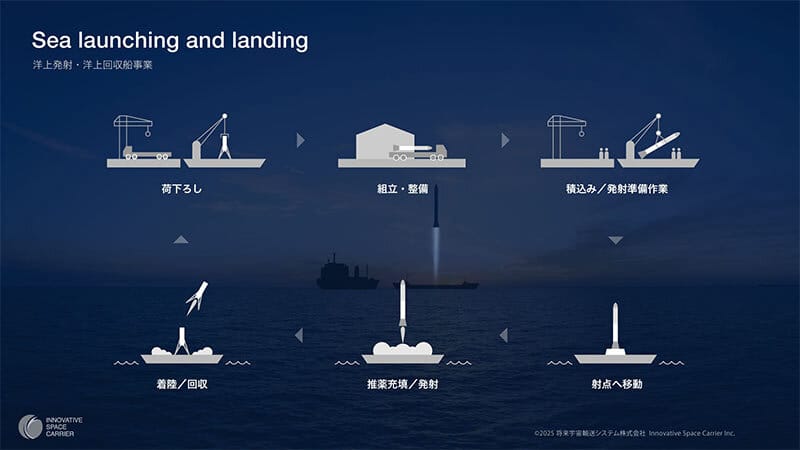
Innovative Space Carrier’s offshare launch and recovery concept. Source: Innovative Space Carrier
-
INDUSTRIAL-X raised ¥1.93 billion (~ US$ 12.45million) [Space Media] through third-party share allocation and bank loans. The company specializes in industrial digital solutions and was awarded a Japan's Space Strategy Fund award in 2025 to conduct a feasibility study on building a satellite manufacturing supply chain.
-
ZENRIN will consolidate ownership of Will Smart, a digital mobility solutions provider. ZENRIN already holds 43.42% of Will Smart’s shares and will pay ¥349 million to bring its ownership stake to 54.10%. The consolidation is driven by Will Smart's deteriorating financial position after reporting an operating loss of ¥283 million in its most recent fiscal year. Will Smart’s solutions integrate ZENRIN’s geospatial map data, and ZENRIN views the disruption of Will Smart's operations as a risk to regional customers and related initiatives. ZENRIN stated it will continue to support Will Smart's independent management once financial performance stabilizes.
🔭 Science
- A Japanese research team that includes JAXA, Waseda University, and Tokyo University of Science has successfully conducted a combustion test of a ramjet engine [Mainichi] that could accelerate an aircraft to Mach 5, enabling a trip from Tokyo to Los Angeles in under 2 hrs or take passengers from airports into space. The supersonic Concorde jet of the 1970s and 80s topped out at Mach 2. A Mach 5 jet would travel at 5,400 km/hr and at 25 km altitude. The research team has been working on the concept since 2013
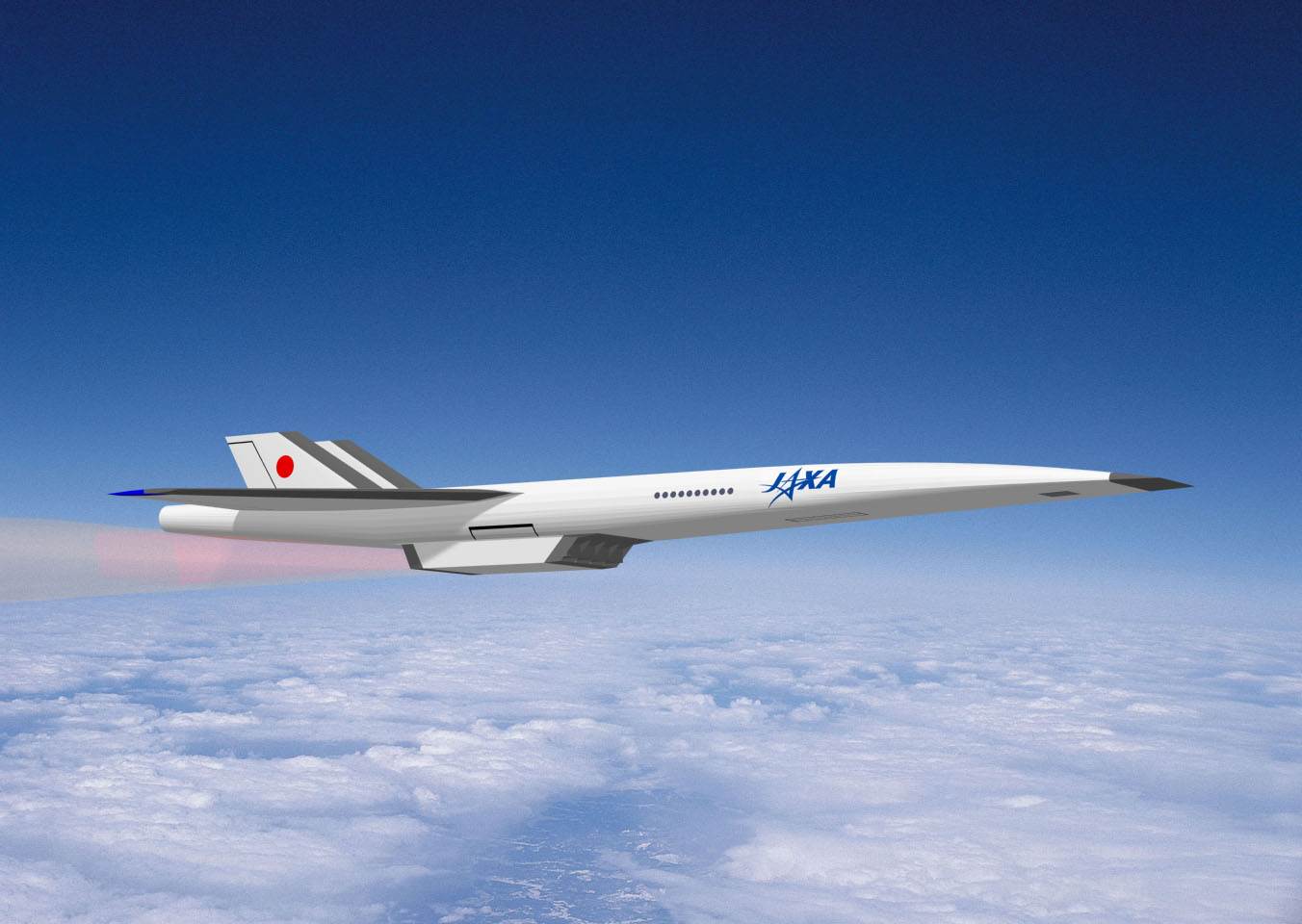
Concept image for Mach 5 hypersonic aircraft: Source: JAXA
🗺️ International Collaborations
- JAXA and ESA formalized their collaboration on ESA's planetary defense mission, RAMSES [JAXA] (Rapid Apophis Mission for SpacE Safety), targeting near-Earth asteroid Apophis. JAXA will contribute lightweight Solar Array Wings (SAWs) and a Thermal Infrared Imager (TIRI) to the spacecraft, and will provide launch services aboard the H3 launch vehicle. ESA and JAXA are on schedule to launch RAMSES in 2028, ahead of Apophis's historically close Earth approach in 2029.
- Japan and NATO are evaluating the mutual use of satellite launch sites [Nikkei Asia] in order to ensure satellites that are lost or damaged can be quickly replaced. Japan is not alone; NATO is also seeking participation from South Korea, Australia, and New Zealand in what it calls the Starlift program. The agreement is not finalized, but it builds on Japan’s role in NATO’s Spacenet framework, which centers on sharing technologies used for defense and intelligence.
- JAXA and the Vietnam National Space Center (VNSC) signed a revised agreement on satellite data exchange [JAXA]. The original agreement was signed in September 2017 and focused on leveraging ALOS-2 data for disaster management, agriculture, and forestry. The new agreement extends this data collaboration to the new ALOS-4 (aka DAICHI-4) as well as strengthening joint R&D efforts under the APRSAF’s Space Applications for Environment (SAFE) initiative. JAXA is also supporting VNSC through the planned launch of Vietnam’s LOTUSat-1 with funding provided under Japanese ODA.
🎥 Videos
JAXA
- HTV-X Dual Use explainer video [Japanese]
Launches
- Rocket Lab launch of StriX 9 "Viva La StriX” [English]
- Rocket Lab launch of StriX 10 “10 Owl of 10” [English]
📆 Asia-Pacific Conferences & Events
This newsletter is mostly focused on Japan, but I also like to highlight events across the Asia-Pacific region. Some upcoming conferences include:
July 2026
- JSASS 68th Structural Strength Lecture Conference 2026 - 29 Jul - 30 Jul - Otsu, Japan
August 2026
- 23rd Annual Meeting of the Asia Oceania Geosciences Society (AOGS ) - 2 - 7 Aug - Fukuoka, Japan
- 36th Astrodynamics Symposium - 3 - 5 Aug - Sagamihara, Japan
- 𝟮𝗻𝗱 Philippine Space Science and Astronomy Research Conference (𝗣𝗦𝗦𝗔𝗥𝗖) - 3 - 5 Aug, Cebu City, Philippines
- 3rd International Conference on AI Sensors and Transducers (AIS 2026) - 2 - 7 Aug - Jeju, South Korea
- Fukushima Space Conference - 6 - 7 Aug -
- Philippine Space Week 2026 - 8 - 14 Aug - Manila, Philippines
- OpenStreetMap Kansai Conference - 9 Aug - Osaka, Japan
- 15th CanSat/CubeSat Leader Training Program (CLTP) - 18 - 28 Aug - Chiba, Japan
- Cesium DevCon Japan - 19 Aug - Tokyo, Japan
- Tokyo Open Data Hackathon 2026 (都知事杯オープンデータ・ハッカソン 2026) - 22 Aug - Tokyo, Japan
- Cloud Native Geospatial (CNG) Forum - 24 Aug - Tokyo, Japan
- STAC Sprint and Workshop - 25 - 27 Aug - JAXA Tsukuba Space Center, Tsukuba, Ibaraki, Japan
- 3rd IAA Conference on AI for Space - 26 Aug - Seoul, Republic of Korea
- Misasa Deep Space Ground Station Open House - 29 Aug - JAXA Usuda Deep Space Center
- FOSS4G Hiroshima - 30 Aug - 5 September - Hiroshima, Japan
September 2026
- Bengaluru Space Expo (BSX) 2026 - 7 - 9 Sep - Bengaluru, India
- UN/Republic of Korea Workshop on ISWI - AI-Enabled Space Weather 2026 - 7 - 11 Sep - Seoul, South Korea
- 35th Congress of the International Council of the Aeronautical Sciences (ICAS) - 13 - 18 Sep - Sydney, Australia
- 25th Australian Space Research Conference (ASRC 2026) - 29 Sep - 1 Oct - Adelaide, Australia
October 2026
- New Zealand Aerospace Summit 2026 - 1 - 2 Oct - Christchurch, New Zealand
- 39th MEWS - JAXA Microelectronics Workshop 2026 - 1 - 31 Oct - Tsukuba, Japan
- Code for Japan Summit 2026 - 3 Oct - Chiyoda-ku, Tokyo
- 47th Asian Conference on Remote Sensing (ACRS 2026) - 12 - 16 Oct - New Delhi, India
- Space Summit Asia-Pacific - 13 - 14 Oct - Narita/Tokyo, Japan
- Hokkaido Space Summit - 14 - 16 Oct - Obihiro, Hokkaido, Japan
- Space for Island Nations Conference (SINC) - 26 - 28 Oct - Malé, Maldives
- 10th Global Moon Village Workshop & Symposium - 26-27 Oct - Bangkok, Thailand
- Asia-Pacific International Symposium on Aerospace Technology (APISAT 2026) (第64回 飛行機シンポジウム) - 27 - 29 Oct - Sapporo, Japan
- 32nd Asia-Pacific Regional Space Agency Forum (APRSAF-32) - 27 - 30 Oct - Bangkok, Thailand
- JSASS Annual Meeting 2026 - 28 - 30 Oct - Sapporo, Japan
- Thailand Space Expo 2026 - 28 - 31 Oct - Bangkok, Thailand
If you’ve made it this far, thank you for reading. I have also recently started a YouTube news channel. Please be in touch via LinkedIn with any feedback, questions, comments, or requests for future topics. And if you have a friend or colleague that you think would enjoy JEO, please share it!
Until next time,
Robert
Coolness...
the sound of the bell
as it leaves the bell.
– Yosa Buson (1716–1784) - translated by Robert Hass
涼しさや
鐘をはなるる
かねの声
suzushisa ya
kane o hanaruru
kane no koe