JEO 19 - News Roundup - 2 Sept 2026
Topping this news roundup, we’ve got stories on J-LEO, the planned domestic LEO satellites comms network, sovereign AI, and much more.
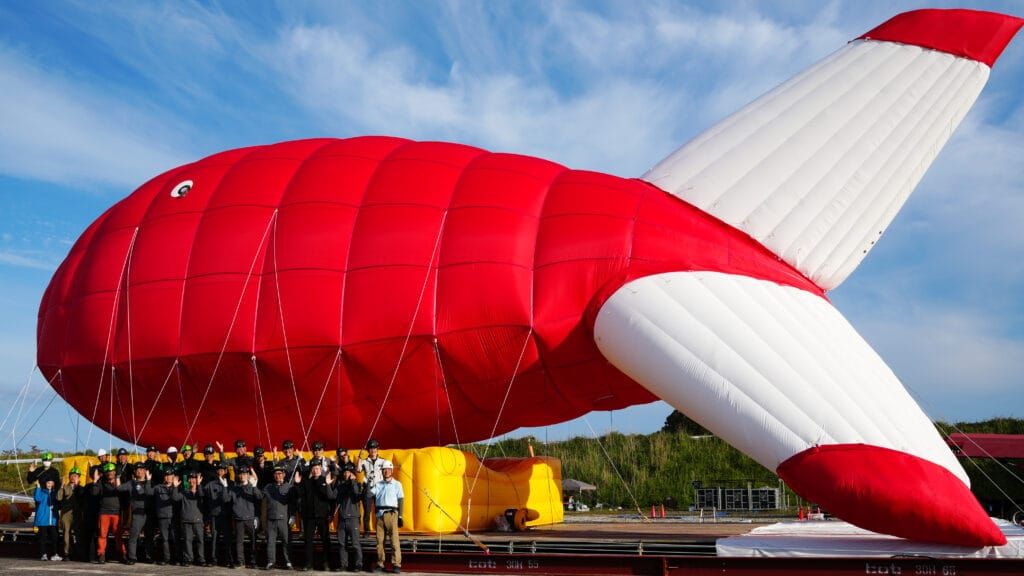
Welcome to Japan Earth Observer (JEO), a monthly newsletter about the space, Earth observation and geospatial industries in Japan.
Topping this news roundup, we’ve got stories on J-LEO, the planned domestic LEO satellites comms network, sovereign AI, and much more.
On to the news…
News & Announcements
📡 Rakuten-led consortium wins J-LEO sovereign satellite network
The Ministry of Internal Affairs and Communications (MIC) has allocated almost US $1b in subsidies to build out a $2 billion domestic LEO satellite communications network being called J-LEO. The RFP required companies to meet several conditions:
- Achieve a nationwide rollout by March 2029;
- Complete all network and data control domestically in Japan;
- Support video calls on regular smartphones for at least 70% of the day;
- Enable free roaming across carriers during disasters.
This type of constellation would be along the lines of SpaceX Starlink, Amazon LEO, ASTS SpaceMobile or IRIS² in Europe. Japan doesn't currently have the capacity to build a constellation like this on its own. So there were a few ways to potentially make this happen:
- Use a Starlink partner that can meet the requirements - KDDI, SoftBank, and NTT DOCOMO already provide D2D services in partnership with SpaceX’s Starlink
- KDDI provides a Starlink Direct product, including existing global coverage through partnership with firms like T-Mobile
- Softbank also has a Starlink Direct offering, though it is only just rolled out, so is at least a year behind KDDI
- NTT DOCOMO has a Starlink Direct business offering, but not one for consumers
- SkyPerfect JSAT's recently signed a deal to be first Amazon LEO reseller a couple of weeks ago, though Amazon LEO has not yet reached critical mass in terms of the number of satellites required to offer global coverage
- Rakuten Mobile had recently announced a new joint venture with AST SpaceMobile in June through which it would purchase multiple AST satellites to establish a network. Rakuten also has access to 700 MHz spectrum that matches Rakuten's ground frequency.
None of these solutions would have a domestic company building an end-to-end solution, but each would have potentially offered some control over a domestic service. This is not a dissimilar scenario to Japan buying reserved access to the latest Planet Labs Pelican satellites through Sky Perfect JSAT in 2025.
In the end, it didn’t matter. The Ministry of Internal Affairs and Communication (MIC) (総務省) officially selected Rast Co Ltd (50/50 Rakuten/AST SpaceMobile JV) for Japan's sovereign LEO direct-to-cell constellation. MIC will distribte the ~¥150B (~US $926M) subsidy over 3 years as well as allowing use of the 700 Mhz spectrum for direct satellite communications services. It seemed possible that at least one Starlink-affiliated alternative would bid, but the Rakuten/AST SpaceMobile team ended up being the only bidder. Rakuten completed the first Japan D2C video call on a Bluebird satellite in April 2025 and expects to be able to provide commercial service in 2026.
Beyond the ~¥150B MIC subsidy, Rakuten and the University of Tokyo secured a separate ¥11 billion yen grant from the JAXA Space Strategy Fund for space-ground network integration R&D. This is a separate funding stream supporting the same J-LEO sovereign D2D constellation build-out.
AST Space Mobile, after successfully launching Bluebird 8, 9, and 10, is planning to launch 11, 12, and 13 in early August - this will be the first of the more advanced Block 2 satellites, with larger antenna arrays and higher peak bandwidth. At 2,400 sf, they will be the largest antenna structures in low Earth orbit (LEO).
🛰️ Technology and Infrastructure
-
The Ministry of Internal Affairs and Communications (MIC) has allocated almost US $1b in subsidies to build out a $2 billion domestic LEO satellite communications network being called J-LEO. The RFP required companies to meet several conditions:
- Achieve a nationwide rollout by March 2029;
- Complete all network and data control domestically in Japan;
- Support video calls on regular smartphones for at least 70% of the day;
- Enable free roaming across carriers during disasters.
This type of constellation would be along the lines of SpaceX Starlink, Amazon LEO, ASTS SpaceMobile or IRIS² in Europe. Japan doesn't currently have the capacity to build a constellation like this on its own. So there were a few ways to potentially make this happen:
- Use a Starlink partner that can meet the requirements - KDDI, SoftBank, and NTT DOCOMO already provide D2D services in partnership with SpaceX’s Starlink
- KDDI provides a Starlink Direct product, including existing global coverage through partnership with firms like T-Mobile
- Softbank also has a Starlink Direct offering, though it is only just rolled out, so is at least a year behind KDDI
- NTT DOCOMO has a Starlink Direct business offering, but not one for consumers
- Rakuten Mobile had recently announced a new joint ventuire with AST SpaceMobile in June through which it would purchase multiple AST satellites to establish a network. Rakuten also has access to 700 MHz spectrum that matches Rakuten's ground frequency. It expects to be able to support limited service by the end of 2026 and full service in 2027
- SkyPerfect JSAT's recently signed a deal to be first Amazon LEO reseller a couple of weeks ago, though Amazon LEO has not yet reached critical mass in terms of the number of satellites required to offer global coverage
None of these solutions would have a domestic company building an end-to-end solution, but each would offer some control over a domestic service. This is not a dissimilar scenario to Japan buying reserved access to the latest Planet Labs Pelican satellites through Sky Perfect JSAT in 2025.
-
Mitsubishi Heavy Industries (MHI) and Preferred Networks (PFN) have formed a sovereign AI alliance for defense and infrastructure [MHI]. The new partnership will co-develop Japanese-built sovereign AI models for automating machinery, critical infrastructure, and national security systems. The partnership targets high-reliability systems resilient to foreign supply chain vulnerabilities, with an equity investment tie-up planned by the end of 2026.
- Why does this matter? While Japan is not home to any of the frontier AI companies, it has several leaders in AI model development for specific applications. Preferred Networks develops its own AI models, and Sakana AI specializes in compositing other frontier models and applying them for business applications. Japan also has several leaders in physical AI for robotics and autonomous vehicles. Given the recent banning of the Anthropic Fable model’s use by non-US citizens and the delayed availability of Mythos and OpenAI’s Sol to non-US entities, efforts like this MHI/PFN tie-up are both understandable and inevitable.
-
Sakana AI announced the establishment of its Recursive Self-Improvement (RSI) Lab, a dedicated internal research group based at its Tokyo headquarters, tasked with redesigning the AI development process using AI itself. The RSI Lab is built on two years of foundational research in Agent-Native Models and Recursive Self-Improvement. The RSI Lab is actively recruiting frontier research scientists and core engineers.
- Why does this matter? Japan’s AI efforts do not have access to the same capital or compute resources as the frontier research labs in the U.S. and China. A key strategic thesis of Sakana’s effort is that compute-efficient self-improvement (rather than the hyperscale brute force used by other frontier research labs) is both a structural necessity given Japan's compute position and the approach most likely to generalize globally.
-
SKY Perfect JSAT and Kobe-based startup Banyans jointly announced development of KAZAMI™ (かざみ), a new cloud movement prediction system [SPACE Media] that uses imagery from Japan's geostationary Himawari weather satellites. The system analyzes Himawari's 10-minute interval observation images to predict cloud movement from 10 minutes to several hours ahead. In validation tests for specific locations in Japan, KAZAMI achieved over 90% forecast accuracy at the 10-minute horizon and over 80% accuracy at 180 minutes.
- Why does this matter? While this may sound like weather forecasting technology, that is not the primary use. Rather, it is aimed at helping satellites-based optical communications (laser-based data links to the ground) systems to proactively switch to alternative ground stations when cloud cover is approaching. Most ground station links are currently radio or microwave, but these channels are running out of capacity and there is an ongoing shift toward using higher bandwidth lasers for downlinks. But clouds degrade or interrupt laser communications systems, so a system that can reliably predict cloud cover for a given location can help optimize these next-generation systems. There may also be utility for quantum key distribution (QKD) systems.
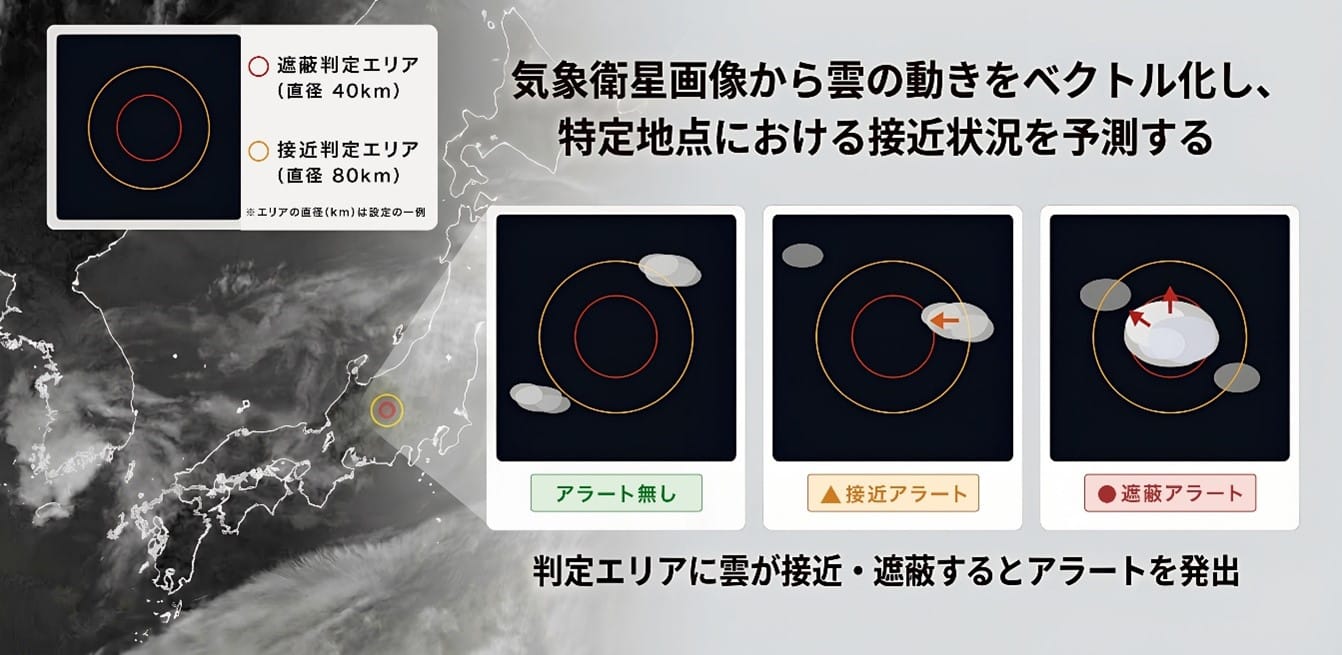
KAZAMI cloud movement foresting system. Source: Sky Perfect JSAT
- MIERUNE has launched commercial sales of MIERUNE Map Tile, a vector tile map product designed for closed-network and offline environments.
- Why does this matter? While we are all accustomed to having near ubiquitous access to commercial mapping systems such as Google Maps and Apple Maps, there are an array of scenarios in public infrastructure, defense, finance, disaster response, and government sectors where these mapping tools cannot be used due to security and compliance requirements or because a stable internet connection is unavailable . MIERUNE’s new solution is a self-hostable package that relies on the open PMTiles format, open source MapLibre,, Japanese-language font PBFs, and full documentation for deployment on-premises (behind a firewall) or on major cloud platforms (AWS, GCP, Azure). The product also offers monthly data updates via MIERUNE's data pipeline.
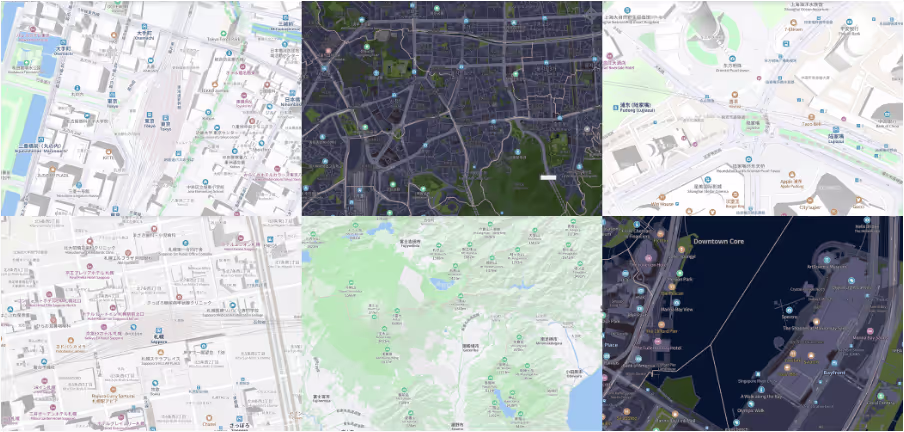
Examples of MIERUNE’s new Map Tile product. Source: MIERUNE
- Nippon Television (NTV) and interactive technology company Bascule announced the launch of "TerraCaster" (テラキャスター), a real-time Earth observation video platform leveraging imagery from Japan's geostationary Himawari weather satellite. The platform uses interpolation to produce seamless, smooth video from Himawari's 10-minute interval observation images, enabling continuous Earth visualization with images up to at least one hour in the past. The service was deployed across more than 60 digital signage displays in major Japanese cities, including an 11K ultra-high-definition display at Toranomon Hills Station Vision in Minato Ward, Tokyo, to coincide with World Environment Day on June 5, 2026. You can check out an example at https://terracaster.space/.

TerraCaster in a building lobby. Source: Japan Television (NTV)
- Astroscale rolled out the Atmospheric Impact of Reentered Spacecraft (AIRS) initiative alongside Planet Labs and the University of Southampton. The collaboration will develop protocols for sharing proprietary spacecraft material composition and mass breakdown data with academic researchers, enabling better modeling of atmospheric emissions caused by spacecraft ablation during reentry. This work aims to address growing scientific uncertainty around the environmental effects of accelerating LEO launch cadence. The AIRS initiative will enable space operators and manufacturers to share different levels of information including: 1) non-proprietary spacecraft design information with academic researchers to improve the accuracy of atmospheric modeling while protecting commercially sensitive data; 2) information such as material composition and approximate mass breakdowns can be shared under confidential bilateral agreements; 3) more detailed data, including component layouts or expected reentry profiles, may be shared at the participant’s discretion, helping to build a more accurate and comprehensive picture of reentry impacts.
- Why does this matter? As activity in low Earth orbit accelerates, the number of satellites reentering Earth’s atmosphere is expected to rise significantly in the coming years. Starlink on its own is expected to deorbit 1,000+ satellites per year. While space sustainability efforts have historically focused on in-orbit operations and debris removal, the atmospheric effects of spacecraft reentry remain an underexplored area of research. During reentry, spacecraft are exposed to extreme heating and interaction with atmospheric gases, leading to melting, fragmentation and vaporization of materials. These processes release chemical compounds at various layers of the upper atmosphere, making it difficult to directly measure or model. Researchers have been attempting to simulate the effects of re-entry, but current simulations rely on simplified spacecraft assumptions due to limited availability of actual manufacturing data. Without access to real-world industry data, the results of the modeling will have limited relevance. We've been down this road before, when we discovered that the CFCs used in air conditioning were damaging the ozone layer that protected life on Earth. It may turn out that we need to consider alternative materials for manufacturing our satellites.

Artist rendering of a satellite reentry. Source: Astroscale.
- AstroX has successfully completed a 550 kg tethered balloon integrated ground systems test [AstroX] at its Minamisoma, Fukushima facility. The trial was the first to simultaneously operate three key Rockoon launch subsystems: a self-propelled tilt-up mechanism (跳ね上げ装置), a deferred-payout winch (繰り延べウインチ), and a containerized balloon release platform (コンテナ式放球架台). A 23.3-meter balloon was inflated with helium, elevated by the tilt-up device, and a dummy rocket was successfully separated from the release platform. The test builds on prior milestones: a crane-lifted dummy rocket separation test in December 2025 and a standalone tilt-up device operation test at the factory in March 2026. The next milestone is a free-flight test using a 40 kg balloon, with the company targeting first Rockoon-mode space-altitude (above 100 km) achievement within fiscal year 2026.
- Space Data has launched a new monthly subscription advisory service [SPACE Media] under its NEXA next-generation resilience platform, targeting companies seeking entry into defense, public sector, and international development markets. The new service combines individual consultations, research analysis, and monthly study sessions.
- Japan's House of Representatives passed an amendment to the Space Activities Act [SPACE Media ]to extend licensing and safety management requirements to rockets that do not carrying satellites, such as reusable launch vehicles and orbital transfer vehicles (OTVs). This will bring these newer vehicles under the existing third-party liability compensation framework. This plugs a regulatory gap that had left emerging space transportation models with some legal ambiguity, and it is expected to facilitate financing and insurance for Japanese launch startups such as ISC, Interstellar, and Space One.
💱 Contracts
- Norwegian Kongsberg Satellite Services (KSAT) is expanding its partnerships with three Japanese satellite constellation operators. KSAT operates more than 40 ground stations globally, including facilities in Svalbard and Antarctica, giving its customers global network coverage essential to support near-real-time data delivery at constellation scale.
- Axelspace is expanding its collaboration with KSAT. Axelspace has been working with KSAT since 2021, but with seven next-generation GRUS-3 satellites coming online, Axelspace will need more ground station capacity.
- iQPS signed an expanded partnership agreement with KSAT to support its 36-satellite SAR constellation planned for completion by 2030. iQPS will adopt KSAT's KSATlite, a fully automated ground station service designed for small satellites and mega-constellations. iQPS is aiming to image virtually any location on Earth within an average of 10 minutes or observe specific regions at 10-minute intervals.
- Synspective and KSAT announced an expansion of their strategic alliance, to support operations of its StriX SAR satellite constellation. Similar to iQPS, Synspective will leverage KSATlite to increase downlink opportunities and accelerate delivery of SAR data products with minimal latency. Key focus areas for joint development include sovereign capability solutions and maritime domain awareness.
- Hokkaido Spaceport has signed an MOU with US firm, Firefly Aerospace for a launch feasibility study. Space Cotan (the Hokkaido Spaceport operator) will work with Firefly to study launching Firefly's Alpha rocket from Hokkaido. The study will assess technical requirements and regulatory requirements for orbital launch capability from northern Japan in order to serve the broader Asian satellite market.
- ispace and Japan Airlines (JAL) have signed a lunar payload service agreement for Mission 3 planned for 2028..ispace and Jalux (JAL’s trading arm) will launch the "Argo Project" offering commercial lunar payload capacity to private enterprises and municipalities. Jalux has designed a 20x20x10 cm "Möbius Ark" container for cultural and regional items destined for the lunar surface
- Idemitsu Kosan has been awarded funds from the JAXA Space Strategy Fund for efficiency improvement and mass production of space CIGS (copper indium gallium selenide) thin-film solar cells. The lightweight, flexible, radiation-hardened cells minimize restricted rare metals compared to traditional multi-junction cells. A dedicated R&D and pilot manufacturing line is scheduled to open at Idemitsu's next-generation technology research institute in Chiba in 2027.
- Rymansat Project has signed a launch agreement with Alba Orbital for Japan's first PocketQube satellite. Rymansat Project is a Japanese all-volunteer community space group that builds small satellites; the RSP-P00 is Japan's first PocketQube-class (5cm square) picosatellite. Alba Orbital is a Scotland-based company that makes the AlbaPod satellite deployer technology and contracts with rideshare missions like those provided by SpaceX. The PocketQube form factor is making space more accessible to high school, university, and other development teams with limited resources.
- Innovative Space Carrier (ISC) passed a stage gate review [ISC] on its Phase 3 Small Business Innovation Research (SBIR) and has unlocked an additional allocation of ¥1 billion (~ US $6.9 million) as well as an extension of the contract period. The additional funding will help support ISC's development of a reusable launch vehicle program and reflects a positive official assessment of the company's technical and commercial progress.
- JAMSS (Japan Manned Space Systems Corporation) has been awarded an additional year on its R&D with Japan's Ministry of Land, Infrastructure, Transport and Tourism (MLIT) under its Stardust space development accelerator program. The research is focused on developing automated construction technology for a future lunar base (宇宙建設革新プロジェクト). In FY2025, JAMSS developed staged scenarios spanning from pre-habitation preparation through early crewed lunar development. In the FY2026 phase, the scope expands to conducting simulations and verification of construction processes within a digital twin environment.
- ASTRO GATE, a spaceport planning and operations firm, announced it will work with Cosmotech to jointly conduct operational support for JAXA [Space Connect]'s newly established Public-Private Co-Creation Propulsion Development Center (官民共創推進系開発センター) at JAXA's Kakuda Space Center in Miyagi Prefecture, partnering with Co., Ltd., which received the primary contract from JAXA. The center is designed to lower the entry barrier for private companies and research institutions developing liquid rocket engines, offering test facilities that accommodate engine system tests, turbopump tests, combustion chamber tests, and component trials using mobile test stands adaptable to diverse configurations. The new services from ASTROGATE and Cosmotech aim to provide one-stop development support.
- Why does this matter? If Japan is going to reach its goal of 30 domestic rocket launches per year by the early 2030s, it needs to help private launch vehicle developers to move faster with fewer resources. By providing national rocket engine development and test facilities for shared use, companies can avoid the cost and time required to build their own test facilities.
- Murata Manufacturing has signed an MOU with U.S. navigation company [Space Connect] Xona Space Systems to jointly develop LEO positioning technology. Xona operates the "Pulsar" LEO PNT service, which offers stronger ground signal strength and faster positioning data acquisition compared to traditional PNT systems (like GPS and Galileo) that operate in medium- or high-orbit. The collaboration will combine Xona's LEO PNT infrastructure with Murata's high-frequency/wireless communications, sensor, timing device, and module design technologies to develop products and solutions applicable to industrial equipment, communications infrastructure, mobility (including autonomous vehicles, drones, and construction machinery), and defense. Murata’s venture division, WONDERSTONE Ventures, had previously made a financial investment in Xona. Furuno, another Japanese firm has also been testing the Xona signals.
- Aisan Technology has launched Dexio, a building-level digital twin platform that integrates 3D city models (LOD1–LOD4) with point clouds, a citizen reporting tool, and road maintenance workflows. Dexio is uilt on Eukarya's open-source Re:Earth web-GIS system and also leverages MLIT's open data Project PLATEAU specifications.
- Mitsubishi Electric has been awarded a contract to build an Orbital Transfer Vehicle (OTV) [MELCO]. Mitsubishi Electric has previously made significant contributions to the HTV and HTV-X cargo vehicles as well as lunar and deep space probes. Leveraging this work, the funding will support development of an OTV capable of moving spacecraft and payloads between orbits for the purpose of servicing, payload delivery, and refuelling.
- Sharp, Japan Radio, and Sky Perfect JSAT have been awarded an R&D contract with the Ministry of Defense (JMoD) for development of flat antennas [Nikkei Asia] (rather than parabolic) that can receive signals from satellites in both LEO and GEO orbits.
- Synspective successfully launched its 10th SAR satellite, Strix-10 (aka "Ten Owl of Ten") from Mahia Peninsula, NZ on a RocketLab Electron. Synspective has booked 18 more missions with RocketLab in order to complete its constellation.
- Synspective also gained CEOS-ARD certification. The Committee on Earth Observation Satellites (CEOS) is an international coordinating body of more than 60 member and associate organizations, including JAXA, ESA, and NASA. CEOS-ARD is the international standard for satellite data that is ready to use without preprocessing; it’s “analysis-ready data” and gaining the certification requires a greater level of transparency than many EO firms are ready to provide. Synspective is the first commercial SAR satellite operator globally to achieve this certification.
- SKY Perfect JSAT and UK-based Avanti Communications have signed a satellite purchase agreement for the Ka-band geostationary communications satellite HYLAS 3. Following testing and transfer of the Avanti satellte, SKY Perfect JSAT will assume full ownership and will rebrand it JSAT-144D. It is expected to enter commercial operations for JSAT in early FY2027. HYLAS 3 is built on an OHB System satellite bus and is equipped with Ka-band multi-spot beams offering high-throughput and flexible coverage with beam-steering capability for on-demand regional adjustment. It’s orbit is focused on East Asia including Japan. This purchase compliements SKY Perfect JSAT's existing Ku-band geostationary fleet, enabling a multi-band communications network capable of addressing increasingly complex customer requirements, such as autonomous systems and national security applications.
- NTT signed an MOU with Irish space-based optical communications firm MBRYONICS. Under the agreement MBRYONICS will develop an optical transceiver module incorporating NTT's digital coherent technology, which is expected to increase space communication speeds by more than ten-fold over conventional methods. The module will then be integrated into multiple commercial space optical communication terminals (OCTs). This project is a step toward NTT's IOWN (Innovative Optical and Wireless Network) architecture expanding into the space domain.
- Both NTT Group and Sky Perfect JSAT have become Amazon Leo resellers in Japan. Amazon Leo is a new LEO broadband service being developed by Blue Origin to compete with Starlink. Both companies plan to sell the service to enterprises and government customers. NTT will be selling the offering under its NTT C89 brand.
- The Graduate University for Advanced Studies (SOKENDAI) and satellite data platform operator Tellus signed a collaboration agreement to advance academic research and develop next-generation research talent [SPACE Media] in fields utilizing satellite data and cloud computing. Under the agreement, SOKENDAI will leverage its network of inter-university research institutes for cutting-edge academic research and researcher training, while Tellus will offer satellite data and cloud computing infrastructure as well as host doctoral students as interns.
💴 Equity Funding
- Sky Perfect JSAT has taken an 800M yen (~US $5 million) equity stake in Astroscale for on-orbit servicing as part of Astroscale's broader funding round. The partnership aims to deploy on-orbit satellite servicing and life extension for JSAT's fleet of 17 geostationary satellites.
- MJOLNIR SPACEWORKS (MSW) has closed a Series B funding round [Space Connect] of ¥1.7 billion (~ US $11.5 million), which includes ¥1.2 billion in a third-party allotment equity round and a ¥500 million credit facility. Investors include Incubate Fund, Uchu Frontier Fund No. 2, JIC Venture Growth Investments, and Z Venture Capital, with the credit facility from the Shoko Chukin Bank. The raise brings MSW's cumulative funding to ¥2.0 billion. MSW will invest the funds in advancing its hybrid rocket engine technology, which uses plastic solid fuel and liquid oxidizer, as well as expanding test facilities and developing next-generation engine designs. The company is also developing weld-free rocket propellant tanks for rapid production. MSW has also been awarded ¥1.8 billion over four years in Phase 2 of the JAXA Space Strategy Fund [JEO 17] to develop ultra-lightweight high-pressure gas storage technology.
- Dai Nippon Printing (DNP) (大日本印刷) and ElevationSpace signed a strategic partnership to co-develop a one-stop service combining in-orbit materials testing via ElevationSpace's re-entry capsules with DNP's ground-based structural analysis capabilities. The alliance targets Japanese manufacturers trying to enter the space sector by providing domestic, end-to-end space-proven material qualification, reducing reliance on foreign testing infrastructure. The DNP funding is part of ElevationSpace closing a new ¥10.1 billion (~US $40m) Series B funding round [Payload] (total funding is now $63.5 million). The other funders include: SPARX Asset Management, Beyond Next Ventures, Toyoda Gosei, Nippon Life Insurance, Mitsubishi UFJ Capital, SMBC Venture Capital, NTT Docomo Ventures, Z Venture Capital, Itochu Technology Ventures.
- Why does this matter? ElevationSpace is the leading Japanese firm developing technology for LEO manufacturing and return to Earth, so the funding is a shot in the arm for them to build out their ELS-R reentry capsule. But there are several competitors in North America and Europe, including Varda’s Winnebago and Reditus Space. There is also a race to develop point-to-point cargo delivery services that require related capabilities. These include SpaceX Starfall, ATMOS Space Cargo (Germany), Inversion Space, and Outpost Space.
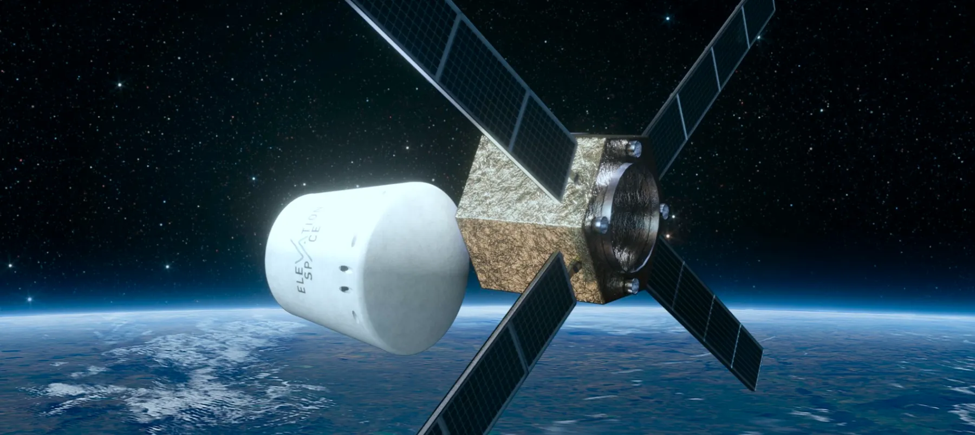
Render of ELS-R platform. Source: ElevationSpace
- Solafune has made a strategic investment in Fortis Intelligence Advisory Co., a Tokyo-based national security advisory firm. The investment signals Solafune's deepening push into the defense and intelligence sector, complementing its existing satellite data analytics and geospatial AI capabilities. The plan is to integrate Fortis Intelligence Advisory's expertise in national security, security, and intelligence with Solafune's Planetary Intelligence OS platform to create a next-generation AI-driven intelligence platform tailored to national security clients.
- Mitsubishi UFJ Bank contributed to the latest $525 million funding round [SPACE Media] for Axiom Space. MUFJ is a new investor and the round was led by Type One Ventures and Qatar Investment Authority. The funding will be used to continue development of Axiom Station, the next-generation commercial space station intended to succeed the ISS, as well as the AxEMU next-generation spacesuit.
- Space BD completed a Series C fundraising round at a total of over ¥3.5 billion (~US $23 million), bringing cumulative capital raised to ¥6.68 billion (¥5.15 billion via third-party allotment increases and ¥1.53 billion in borrowing). This is actually Space BD’s second announcement of Series C funding. They announced an initial tranche of ¥2.4 billion in January 2026. Additional investors in this additional close include Aozora Corporate Investment, ON&BOARD, Kampo NEXT Partners, XTech Ventures, Shin Nippon Air Technologies, Japan Investment Adviser, Spiral Innovation Partners, and Nihon Venture Capital. Space BD plans to use the new capital for hiring and training talent, expansion of launch service capacity by securing additional rocket launch slots, and strengthening its fabless manufacturer function by building in-house planning, design, and quality control capabilities.
🔭 Science
- SPACE SHIFT (スペースシフト) has developed a new proprietary SAR signal processing technique its calling “Eclipse band” that reduces azimuth ambiguity – a phenomenon in Synthetic Aperture Radar (SAR) imagery where signals from unintended objects appear in the image due to the observation principle – without degrading resolution. The Eclipse band technique generates multiple sub-images with intentionally partially-missing frequency bands, cross-referencing them at pixel level to distinguish genuine target returns from sidelobe-derived artifacts, and replaces only the artifact pixels in the full-aperture image. The technology was demonstrated using JAXA’s ALOS PALSAR and ALOS-4 PALSAR-3 data. SPACE SHIFT has already filed for a Japanese domestic patent and intends to integrate Eclipse band into its existing SateAIs™ AI and analytics platform.
- A research team at Iwate University, Hirosaki University, and Okuyama Boring Co. has developed algorithms that use multiple drone LiDAR images to model underground landslide slip planes [MDPI]. This offers a new approach to landslide dynamics prediction for disaster recovery.
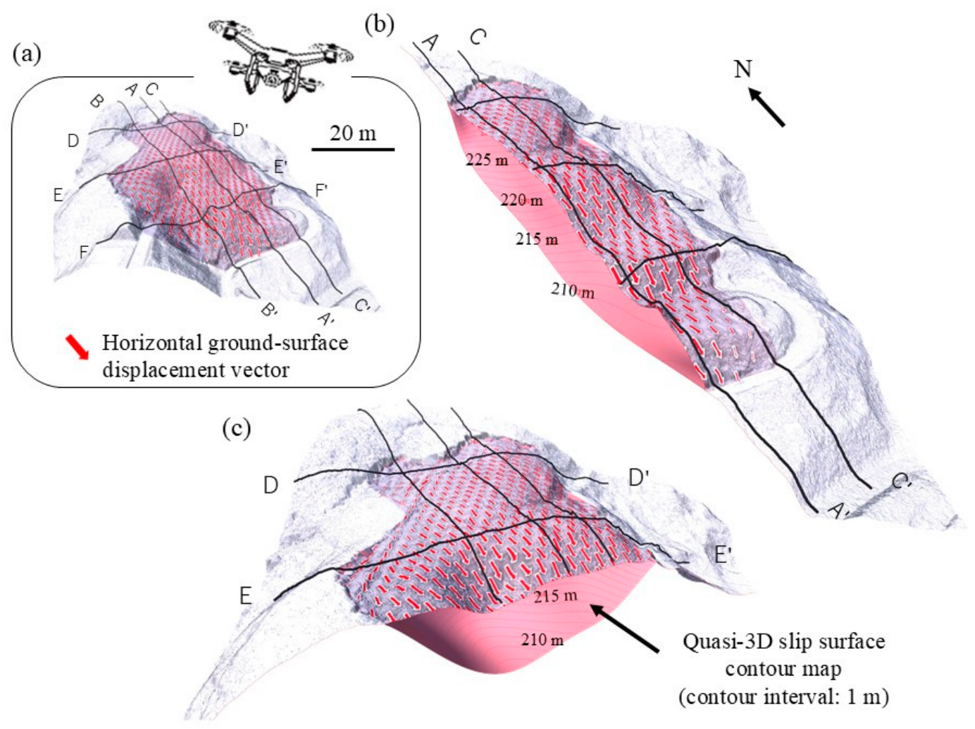
Cutaway view of a slip surface derived from the drone flights. Source: Iwate Unv., Hirosaki Univ. and Okuayama Boring Co.
- JAXA-ESA EarthCARE cloud profiling radar data is now being integrated into ECMWF weather forecasts [ECMWF]. The EarthCARE satellite, launched in May 2024, is a joint mission of ESA and JAXA. The cloud profiling radar (CPR) instrument, which uses radar to visualize the internal vertical structure of clouds, was developed by JAXA. This is the first operational integration of cloud radar observations by any weather forecasting center. The CPR data is expected to improve the accuracy of forecasts for extreme weather events such as typhoons and heavy rainfall, and to strengthen floods and landslides early warning capabilities. Because ECMWF generates global forecasts, the new data will benefit any weather agency that leverages ECMWF forecasts.
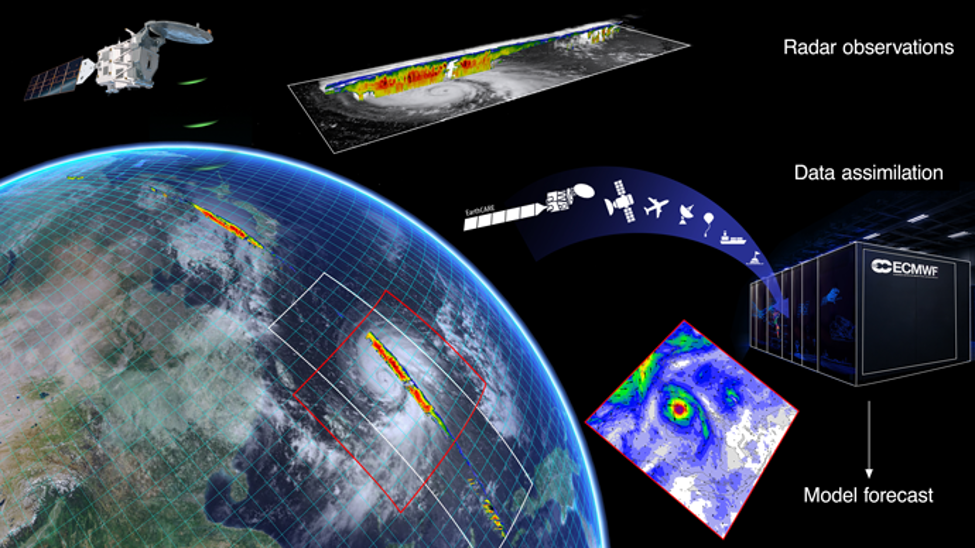
A diagram describing how EarthCARE’s CPR data is integrated into ECMWF’s forecasting system. Source: Credit: ESA/JAXA/ECMWF
🗺️ International Collaborations
- Japan’s METI and Thailand’s MHESI have agreed to an MOU focusing on cooperating on LEO satellite constellations. The cooperation will be coordinated through GISTDA (Thailand’s geospatial and space agency) and JAXA. Targets economic value creation, industrial growth, national security, and disaster monitoring. The agreement builds on existing GISTDA-JAXA data-sharing partnerships including use of the JAXA ALOS satellites and SENTINEL Asia program for regional flood monitoring via Thailand's Sriracha ground station.
- The Paraguay's Chamber of Deputies approved a $23.7M grant from Japan to build a satellite technology development facility at the National University of Asunción [CAD]. The new facility will be operated by the Paraguay Space Agency and will include and Space Lab for small/nano-satellite design, development, and testing as well as a Geo Lab for EO data analysis and disaster management.
- JAXA and the United Nations Office for Outer Space Affairs (UNOOSA) selected two teams for the ninth round of the KiboCUBE programme [JAXA], which provides developing nations with CubeSat deployment opportunities from the ISS's Japanese Experiment Module Kibo. The selected teams are:
- Key Institute of El Salvador, developing CAREY, a 1U CubeSat, which will beEl Salvador's first-ever satellite and will conduct IoT data collection, image acquisition, and low-Earth-orbit cosmic ray measurements
- Chulalongkorn University of Thailand, developing CUSAT-1, a 1U CubeSat targeting flood monitoring, environmental pollution monitoring, and IoT relay applications.
🎥 Videos
JAXA
- HTV-X Dual Use explainer video [Japanese]
- H3 Flight 6
📆 Asia-Pacific Conferences & Events
This newsletter is mostly focused on Japan, but I also like to highlight events across the Asia-Pacific region. Some upcoming conferences include:
August 2026
- FOSS4G Hiroshima - 30 Aug - 5 September - Hiroshima, Japan
September 2026
- Bengaluru Space Expo (BSX) 2026 - 7 - 9 Sep - Bengaluru, India
- UN/Republic of Korea Workshop on ISWI - AI-Enabled Space Weather 2026 - 7 - 11 Sep - Seoul, South Korea
- 35th Congress of the International Council of the Aeronautical Sciences (ICAS) - 13 - 18 Sep - Sydney, Australia
- Planetary Exploration Workshop 2026 (惑星探査ワークショップ 2026) - 24 Sep - Sagamihara, Japan
- 2nd OPENS International Scientific Workshop (第2回 OPENS国際科学ワークショップ) - 28-29 Sep - Sagamihara, Japan
- EARTHBRAIN Technology Conference - 29 Sep -
- 25th Australian Space Research Conference (ASRC 2026) - 29 Sep - 1 Oct - Adelaide, Australia
October 2026
- New Zealand Aerospace Summit 2026 - 1 - 2 Oct - Christchurch, New Zealand
- 39th MEWS - JAXA Microelectronics Workshop 2026 - 1 - 31 Oct - Tsukuba, Japan
- Code for Japan Summit 2026 - 3 Oct - Chiyoda-ku, Tokyo
- 47th Asian Conference on Remote Sensing (ACRS 2026) - 12 - 16 Oct - New Delhi, India
- Space Summit Asia-Pacific - 13 - 14 Oct - Narita/Tokyo, Japan
- Hokkaido Space Summit - 14 - 16 Oct - Obihiro, Hokkaido, Japan
- Space Innovation Challenge 2026 - 26 Oct - Bangkok, Thailand
- Space for Island Nations Conference (SINC) - 26 - 28 Oct - Malé, Maldives
- 10th Global Moon Village Workshop & Symposium - 26-27 Oct - Bangkok, Thailand
- Asia-Pacific International Symposium on Aerospace Technology (APISAT 2026) (第64回 飛行機シンポジウム) - 27 - 29 Oct - Sapporo, Japan
- 32nd Asia-Pacific Regional Space Agency Forum (APRSAF-32) - 27 - 30 Oct - Bangkok, Thailand
- JSASS Annual Meeting 2026 - 28 - 30 Oct - Sapporo, Japan
- Thailand Space Expo 2026 - 28 - 31 Oct - Bangkok, Thailand
If you’ve made it this far, thank you for reading. Please be in touch via LinkedIn with any feedback, questions, comments, or requests for future topics. And if you have a friend or colleague that you think would enjoy JEO, please share it!
Until next time,
Robert
One after another,
people rest on this stone
on the summer moor.
-– Masaoka Shiki (1867–1902) - translated by R. H. Blyth
人休む
一つ石あり
夏野原
hito yasumu
hitotsu ishi ari
natsunohara